From Cracked Foundation to Fully Sealed: A 4-Day Crawl Space Transformation
When a homeowner finally makes the call, something shifts.
We come out and do a thorough inspection. We get under the home and look at everything — and we show you what we're seeing in real time so there are no surprises when we sit back down with you. You'll know exactly what's down there. You'll know exactly what it takes to fix it. And you'll have a clear picture of what your home looks like after the work is done.
No pressure. No scare tactics. Just an honest look at what's happening and a straightforward plan to address it.
Most homeowners tell us the same thing after that first visit.
They wish they hadn't waited as long as they did.
Four Days. One Complete Transformation.
Day four in Decatur. We're wrapping up, and I wanted to walk you through everything we did.
Four days ago this crawl space had a cracked foundation wall, missing wall seal in one of the rooms, and a moisture problem that wasn't going to fix itself. The existing sump pump wasn't cutting it either.
Today it's a different space entirely. New pump. Proper discharge. Crawl seal and wall seal throughout. Spray foam in the joist pockets. Wrapped piers. Dehumidifier hung and running.
That's what four days of real work looks like. Not a patch job. Not a quick fix. A complete system designed to protect this home for years to come.
Where It All Started
Day one, here's what we were looking at.
There was a significant crack running along the foundation wall. Not the kind of thing you patch with hydraulic cement and call it a day. Foundation cracks are pathways for water. Seal the surface and you've just hidden the problem—the water finds another way in eventually.
One of the rooms was missing wall seal entirely in a corner section. That's not a minor detail. Wall seal is what directs moisture away from the foundation and toward the sump pit where it belongs. A gap means water is finding its own path instead.
The existing sump pump wasn't up to the job either. And the discharge? It wasn't running far enough from the foundation to actually move water away from the home.
These aren't isolated problems. They're connected. Moisture finds the path of least resistance, and when your system has gaps, that path leads right into your crawl space and eventually into the air above it.
The Fix: What We Actually Did
Here's what a complete crawl space system looks like when it's done right.
First, the sump pump. We replaced the existing unit with a new pump and ran the discharge line 20 feet out to the lowest point of the property. That's not standard practice for every crew out there, but it matters—and we'll get into why in a minute.
From there, crawl seal went down across the entire floor. Wall seal up along every wall, meeting the floor seal throughout. No gaps, no shortcuts, no corners left exposed. That corner in the second room that was missing wall seal? Taken care of.
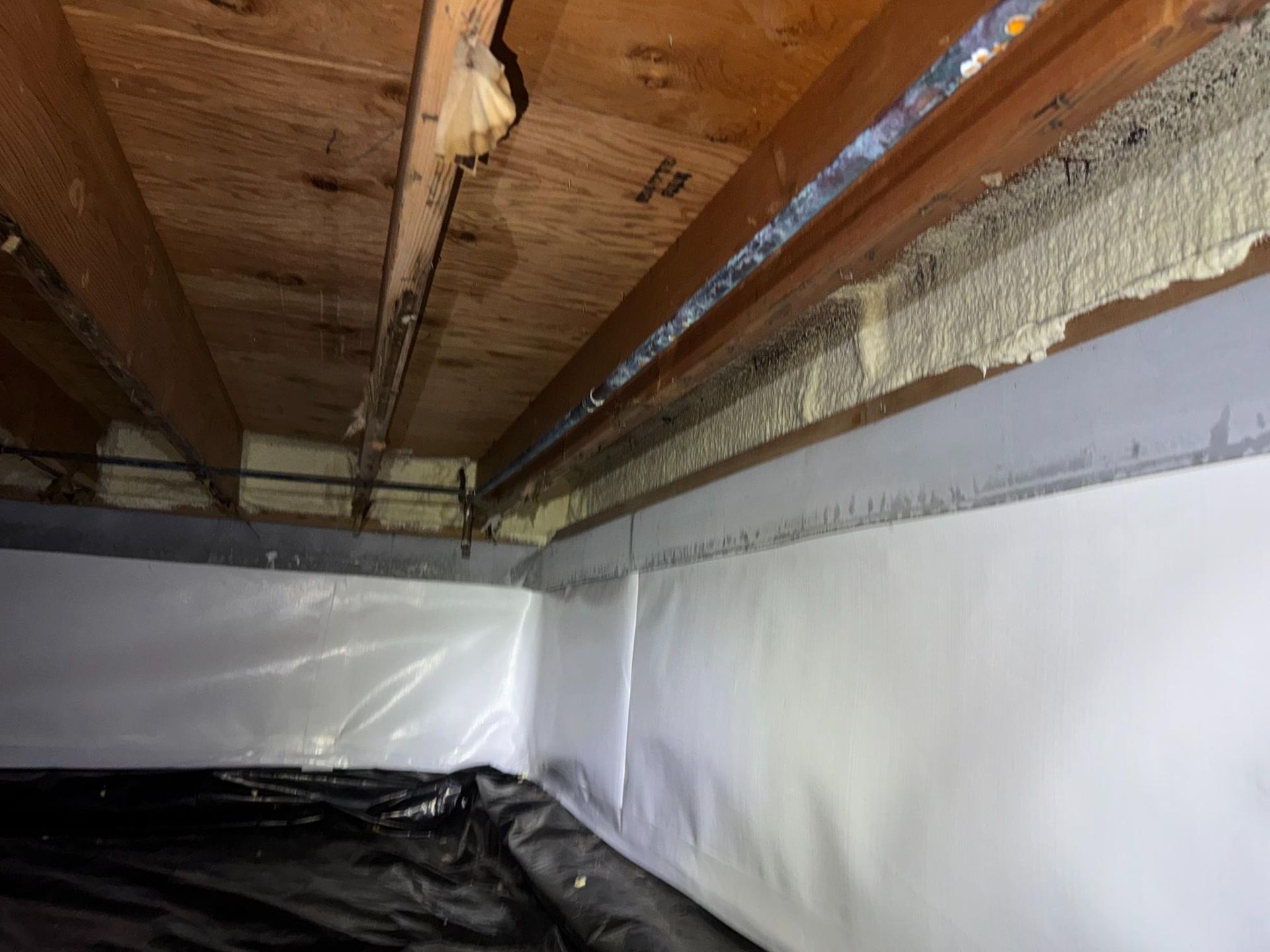
We sprayed foam into every joist pocket along the perimeter. This is one of those steps that's easy to skip because nobody sees it. But joist pockets are one of the most common places for air and moisture to sneak in from outside. Sealing them properly is part of building a complete barrier, not just covering the obvious areas.
The piers got wrapped. The dehumidifier is hung and running. And that foundation crack we found on day one is now properly integrated into the waterproofing system so water can still travel behind and under the seals to reach the sump pit where it belongs.
Every part of this system works together. That's the point. One weak link and moisture finds its way back in.
Why the Discharge Line Matters More Than You Think
This is one of those details most homeowners never think to ask about. But it makes a real difference.
A sump pump pulls water out of your crawl space and pushes it somewhere. The question is where. A lot of installations discharge just a few feet from the foundation. The water comes out, hits the ground, and slowly works its way right back toward your home. You're essentially pumping water in a circle.
We ran this discharge line 20 feet out to the lowest part of the property. That's where water naturally wants to go anyway. We're just making sure it gets there instead of pooling near your foundation and finding its way back in.
It's one of those decisions that's easy to skip on installation day because the homeowner isn't going to check it. But five years from now, when the system is still performing the way it should, that's why.
Ask any contractor you're considering: how far does the discharge run, and where does it drain to? The answer tells you a lot.
What a Finished Crawl Space Should Look Like
Here's what you should see when a crawl space encapsulation is done properly.
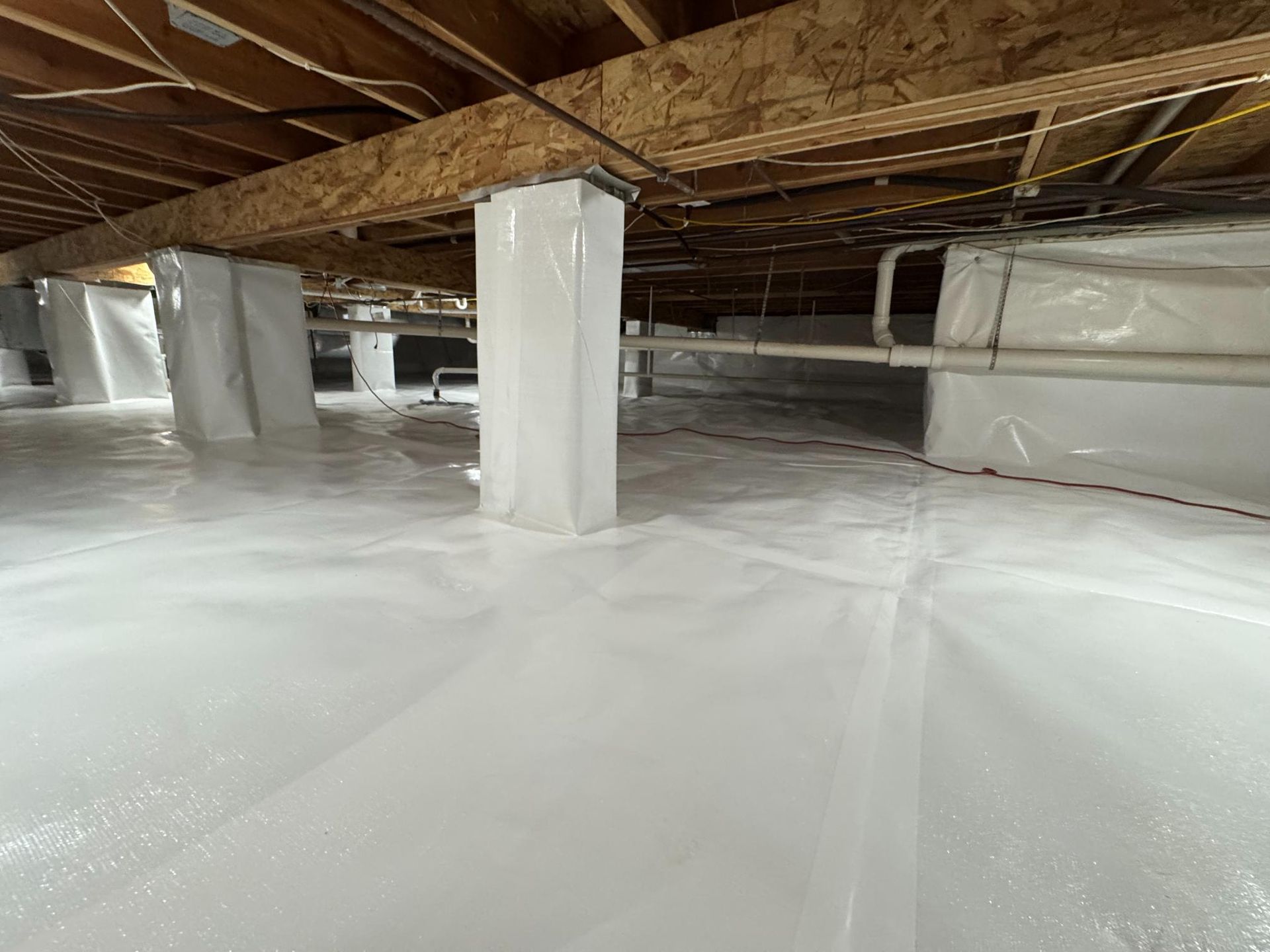
The floor seal covers the entire ground surface with no gaps or bunching. Wall seal runs up every wall and ties into the floor seal cleanly. Every joist pocket along the perimeter is sealed with spray foam. The piers are wrapped. The dehumidifier is mounted and running, not just sitting on the ground.
In the rooms with foundation issues, the waterproofing system is designed to manage water movement—not just block it on the surface. Water needs to be able to travel behind and under the seals to reach the sump pit. That's how the system actually works.
The space should be bright. Accessible. Something you or the next contractor can actually move through and inspect without a problem.
If a crew finishes an encapsulation and you can't tell the difference from when they started—beyond a layer of plastic on the ground—something was missed. A complete job looks complete. Clean walls, sealed floor, working equipment, no loose ends.
That's the standard. Anything less is a shortcut.
What This Means for the Home Above
A lot of homeowners think of crawl space work as fixing a crawl space problem. But what's happening under your home affects everything above it.
That moisture that was finding its way in through the foundation crack and the gaps in wall seal? It was working against the floor framing system every single day. Wood and moisture are not friends. Over time, high humidity levels break down floor joists, create conditions for mold, and make floors soft and unstable.
About 50% of the air you breathe upstairs comes from your crawl space. When that space is damp, musty, and unprotected, that's the air circulating through your home. Your family is breathing it.
With the encapsulation complete and the dehumidifier running, that changes. Humidity levels drop and stabilize. The floor framing system is no longer fighting a losing battle against moisture. The air quality improves throughout the whole house.
It's not just a crawl space fix. It's a whole home improvement. And it starts from the bottom up.
Book A Free Inspection Now
Your crawl space problems aren't going to fix themselves. But they are fixable. Let's get it done — the right way, permanently.
Or call us directly (217) 863-9559
Is Your Crawl Space Telling You Something?
Musty smells. Soft or squeaky floors. Visible moisture. A foundation crack you've been meaning to look into. A crawl space you honestly haven't thought about in years.
These aren't things to wait on. Small problems under your home have a way of becoming expensive ones.
Reach out to Chris or me directly. We'll come out, do a thorough inspection, and show you exactly what we find. No pressure, no surprises. Just honest answers about what's going on under your home and what it would take to fix it right.