
What We're Working On Today in Champaign
When a homeowner finally makes the call, something shifts.
We come out and do a thorough inspection. We get under the home and look at everything — and we show you what we're seeing in real time so there are no surprises when we sit back down with you. You'll know exactly what's down there. You'll know exactly what it takes to fix it. And you'll have a clear picture of what your home looks like after the work is done.
No pressure. No scare tactics. Just an honest look at what's happening and a straightforward plan to address it.
Most homeowners tell us the same thing after that first visit.
They wish they hadn't waited as long as they did.
A Full Crawl Space Drainage Job in Champaign, Illinois
This is Ryan, one of our guys here at My Guys Home Services. He's on site in Champaign this morning, and before the crew gets to work, he's walking the whole property.
Downspout extensions. Drain tile. Sump pit. Wall seal. Crawl seal. It's a full scope job, and there's a lot to coordinate before anyone picks up a shovel.
That walkthrough you're seeing isn't just for the video. It's how we start every job like this. Know the plan, stage the materials, make sure everyone knows their role. Because the work you do before the work starts is what keeps everything running clean and efficient once it does.
Here's a look at what we're working on today.
What's On the Scope Today
This job has five moving parts, and each one is solving a different piece of the same problem.
Downspout extensions, front and back. Right now, water coming off this roof is dumping too close to the foundation. The extensions move that water away from the house and direct it where the grade can carry it safely.
Sixty-five feet of drain tile going into the crawl space. This is the system that catches water that gets in anyway and moves it toward the sump pit.
The sump pit discharge hookup. Once the drain tile collects the water, the sump pump moves it out of the crawl space completely.
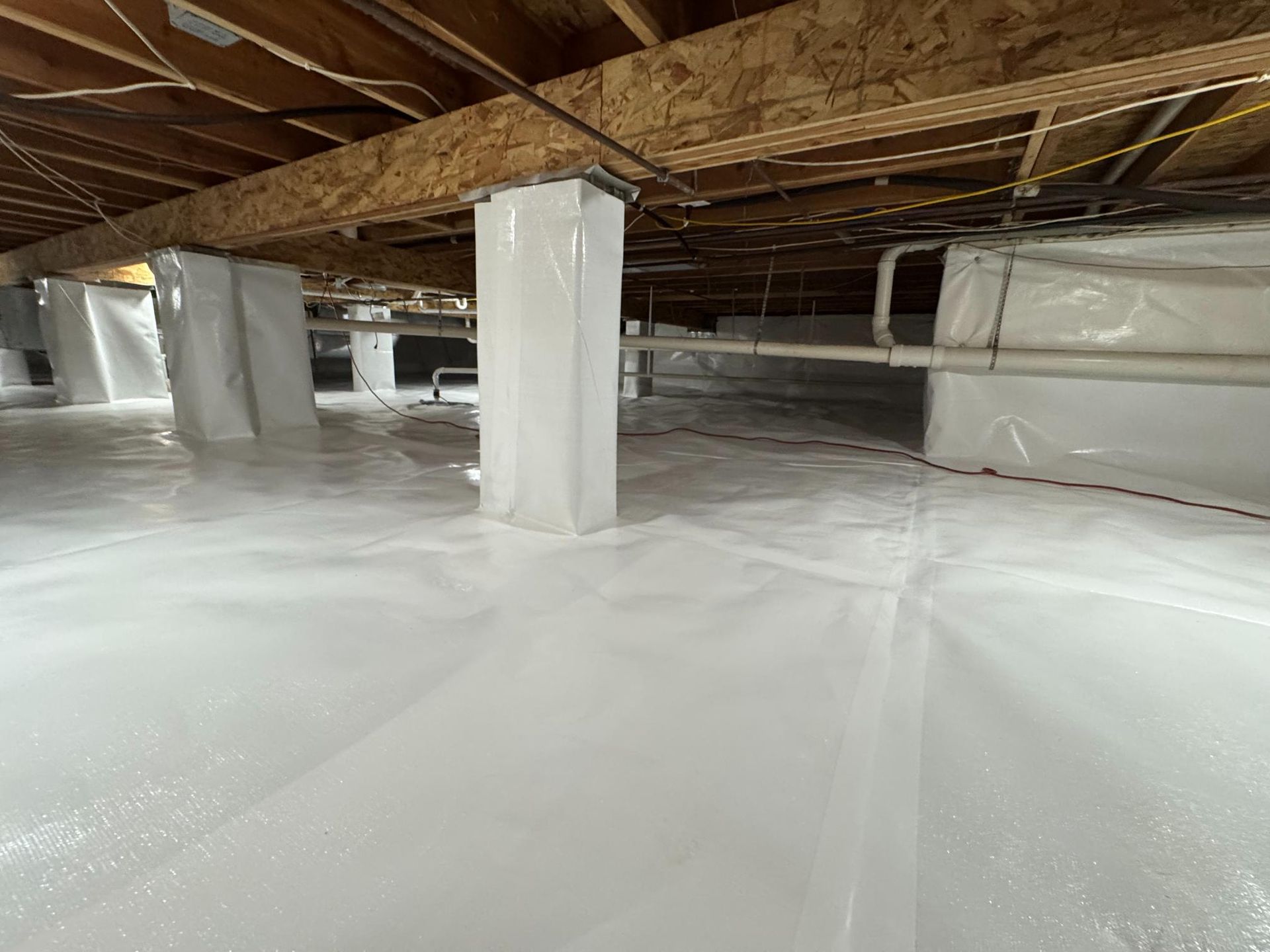
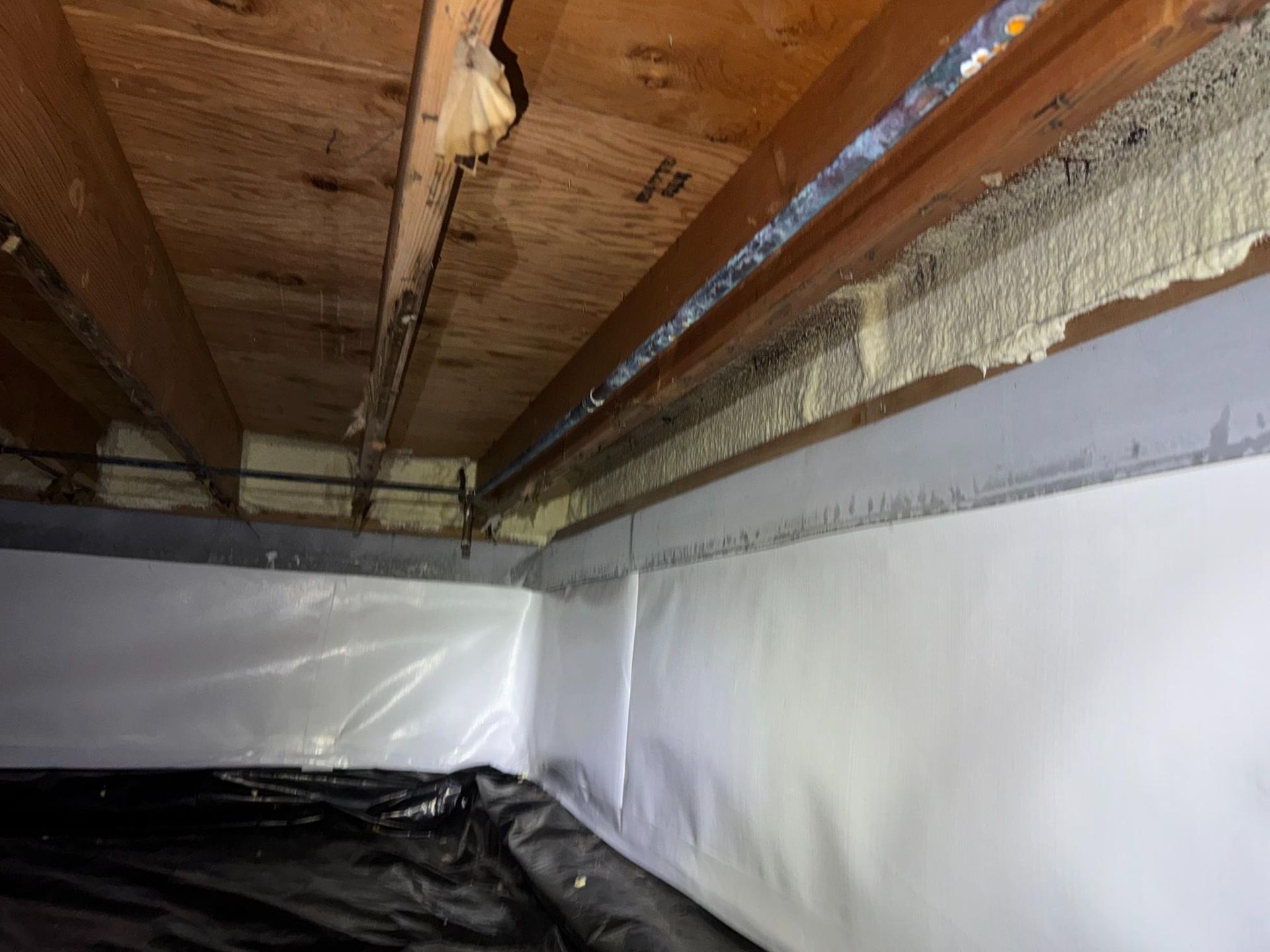
Wall seal and crawl seal throughout. This is the encapsulation—sealing the walls and floor of the crawl space so moisture stops getting in from the ground and the foundation walls.
Every one of these pieces matters. Leave one out and you've only solved part of the problem. Together they work as one complete system that actually keeps this crawl space dry.
Starting Outside: The Downspout Extensions
Before Ryan ever opens the crawl space hatch, he starts outside.
That's intentional. A lot of the moisture that ends up under your home didn't come through the foundation walls—it came from water dumping right next to them. Every time it rains, your gutters collect water from the entire surface of your roof and funnel it to just a few downspouts. If those downspouts are releasing that water six inches from your foundation, you've got a problem.
The extensions on this job are going in front and back. Two in the front, staged out so Ryan knows his straight cut line before he digs. Two more around back, one running straight out with a slight angle where the yard grade shifts, and one traveling along the patio edge.
That angle adjustment matters. A downspout extension that doesn't follow the natural grade of your yard can actually create a low spot where water pools instead of draining. You've solved one problem and created another.
Getting it right on the outside means less work for everything going in underneath.
Heading Into the Crawl Space
Once the outside is staged, Ryan heads in.
This particular crawl space is in pretty decent shape to work in. Open enough for the crew to move around, which makes a difference on a job with this many components going in at once.
Dennis is already in there digging the trench for the drain tile. Sixty-five feet is a full perimeter run in a space this size—that's not a quick dig. The trench has to be clean and consistent so the drain tile sits at the right pitch and water actually moves toward the sump pit the way it's supposed to. A low spot in the trench means a low spot in the system.
Jackson is working on the electrical side. He's already got an outlet and a switch installed, and he's finishing up the dedicated outlet for the dehumidifier. The dehumidifier is a key part of this system—once the crawl space is sealed, you need something actively managing the humidity level inside. Without it, you're just trapping air.
Wall seal and crawl seal go in once the drainage work is done. The walls get sealed first, then the vapor barrier goes across the floor and ties everything together into one continuous system.
Each phase of this job depends on the one before it. That's why the startup walkthrough matters—when everyone knows the sequence, the job moves efficiently and nothing gets done out of order.
Why This Is Never Just One Problem
Most homeowners who call us are focused on one thing. A smell. A soft spot in the floor. Water they noticed after a heavy rain.
And that one thing is real. It's worth fixing. But it's almost never the whole story.
Water doesn't just appear in your crawl space. It travels there. Sometimes through downspouts that are releasing too close to the foundation. Sometimes through soil that slopes toward the house instead of away from it. Sometimes through unsealed vents or gaps in the foundation walls. Usually it's a combination of all of these things happening at once.
That's why a job like this includes five different components. Not because we're trying to sell more work—because each component addresses a different part of how water is getting in and what happens to it once it's there.
Fix just the downspouts and you've helped a little. Add drain tile and a sump and you've helped more. Seal the whole space and actively manage the humidity and now you've actually solved it.
That's the difference between a patch and a real fix.
What a Professional Crew Startup Looks Like
There's a difference between a crew that shows up and starts working and a crew that shows up and starts thinking.
Before Dennis digs a single foot of that trench, Ryan has already walked the property. He knows where each downspout extension is going and what angle it needs to follow. He knows the sequence of work inside the crawl space so nobody is working on top of each other or undoing something that just got done.
Materials are staged. Cut lines are planned. Everyone has a role and knows what comes next.
It sounds simple. But you'd be surprised how many jobs go sideways because a crew skipped this part. A trench dug in the wrong direction. Extensions installed without checking the grade. Components put in out of sequence that have to be redone later.
That kind of disorganization doesn't just slow the job down. It affects the finished product. And once everything is buried and sealed, you can't easily go back and fix a mistake.
The planning you do before the work starts is what makes the finished work last.
Book A Free Inspection Now
Your crawl space problems aren't going to fix themselves. But they are fixable. Let's get it done — the right way, permanently.
Or call us directly (217) 863-9559
Ready to Find Out What's Going On Under Your Home?
If you've got moisture issues, musty smells, or you just want to know what's actually happening under your house, we're happy to come take a look.
Ryan, Chris, or Jeff will answer when you reach out. We'll come do a thorough inspection, show you exactly what we find, and talk through what a real solution looks like for your specific situation.
No pressure. No big sales pitch. Just honest answers from a crew that actually does this work every day right here in Central Illinois.