
Day Two: Finishing a Crawl Space Encapsulation the Right Way
The Final Details That Actually Matter
Day two in St. Joe, and we're putting the finishing touches on this crawl space encapsulation before spray foam goes in.
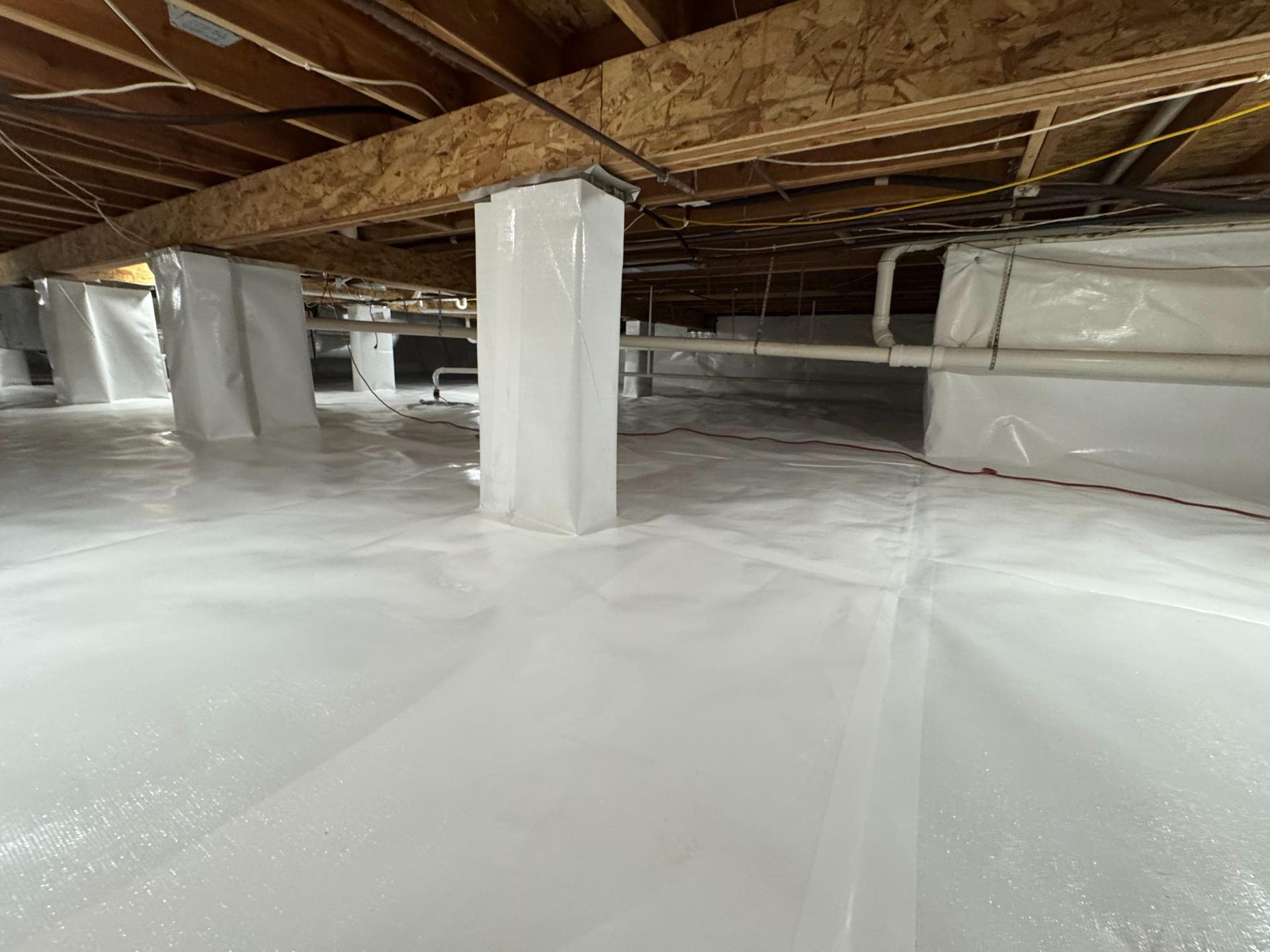
Yesterday, this space had old dimple mat and moisture issues. Today, it's completely sealed with 20 mil fiberglass reinforced vapor barrier. The dehumidifier is already hanging and running. Every pier is wrapped. All the wiring is secured.
Most companies are in and out fast—maybe a day, two at most for a big job. They want to get done and move to the next one. But here's the thing: the final details matter just as much as the installation itself.
Wrapping piers. Securing wires. Taping down condensate lines. These aren't extras. This is what separates encapsulation work that lasts 20 years from work that creates problems in 5.
Speed and quality aren't the same thing. Let me show you what finishing work should actually look like.
What's Happening on Day Two
Right now, we're doing all the detail work that determines whether this encapsulation actually protects this home long-term.
The 20 mil vapor barrier is completely down and sealed. That's your main moisture barrier—fiberglass reinforced, not the thin stuff that rips if you look at it wrong.
Every single pier is individually wrapped. That stops ground moisture from wicking up through the concrete and into the wood structure above it. Skip this step, and you're still getting moisture problems even with a sealed floor.
All the electrical wiring is nailed up properly along the joists. Not just laying across the crawl space where someone could trip on it or damage it during future work.
The HVAC condensate line is taped down so it drains exactly where it should. No pooling water. No backup issues down the road.
And that dehumidifier? It's already running. Already pulling humidity out and starting to dry the wood. We're not waiting until everything's "done" to turn it on—it's working from day one to protect the structure.
These steps take time. But they're what make the difference between a job that's technically finished and one that's actually done right.
Why These Details Determine Longevity
Here's what most homeowners don't realize: the vapor barrier itself isn't what makes an encapsulation last. It's all the finishing work that happens after it goes down.
Those wrapped piers? Concrete is porous. Even with a sealed floor, moisture can still wick up through the concrete piers and into your wood structure. Wrapping each one individually stops that pathway. Skip it, and you're still dealing with moisture issues years down the road—you just won't know why.
Properly secured wiring matters because crawl spaces get used. HVAC techs, plumbers, inspectors—they're all crawling around down there eventually. Wires laying across joists get snagged, damaged, or become tripping hazards. Securing them correctly means they stay safe and functional for decades.
That condensate line from your HVAC system? If it's not positioned and secured right, water pools instead of draining. You just spent thousands on encapsulation, and now you're introducing water back into the space because someone didn't take five minutes to tape down a drain line properly.
The dehumidifier placement and sizing matters too. Too small, it can't keep up. Poorly placed, it works inefficiently and costs you more to run. Getting this right means the system actually controls humidity instead of just looking like it should.
These aren't add-ons or upgrades. This is just finishing the job correctly. Cut corners here, and you're paying for work that won't perform the way it's supposed to.
What Rushed Jobs Look Like
We see it all the time when we're called in to fix someone else's work.
Piers left unwrapped. The vapor barrier is sealed on the floor, but moisture is still getting in through the concrete supports. The homeowner can't figure out why their humidity levels are still high.
Wiring just draped across the joists or lying on the vapor barrier. Eventually, it gets damaged during routine maintenance, or it becomes a safety issue.
Condensate lines left hanging loose or draining directly onto the vapor barrier. Now you've got standing water in a space you just paid to keep dry.
Dehumidifiers that are too small for the space, improperly positioned, or not even plugged in yet when the crew leaves.
Why does this happen? Because the crew is already thinking about the next job. They're behind schedule, they've got another appointment across town, and this one is "close enough." The homeowner will never crawl down there anyway, right?
Except someone will. And when they do, all those shortcuts show up. That "close enough" job becomes a "needs to be redone" job.
The Dehumidifier's Role in the System
See that dehumidifier already running in the video? That's not for show. It's already working to protect this home.
A properly sized and installed dehumidifier changes everything under your house. It pulls moisture out of the air, which means your floor joists stay strong instead of slowly deteriorating. Mold and mildew can't grow in a dry environment. Bugs and pests lose the damp conditions they need.
But here's the part most people don't think about: about 50% of the air you breathe upstairs comes from your crawl space. When that space is humid and musty, that's what you're breathing. When it's clean and dry, your whole house benefits.
Homeowners notice the difference fast—usually within a few days. The air feels lighter. Any musty smell disappears. Even energy bills start dropping because the HVAC system isn't fighting moisture anymore.
But the dehumidifier has to be sized right for your space and placed where it can work efficiently. Just throwing any unit down there doesn't cut it. This is another one of those details that separates real work from shortcuts.
What to Look for When Your Job Is "Done"
If you're having crawl space encapsulation work done, here's what you should see on the final day:
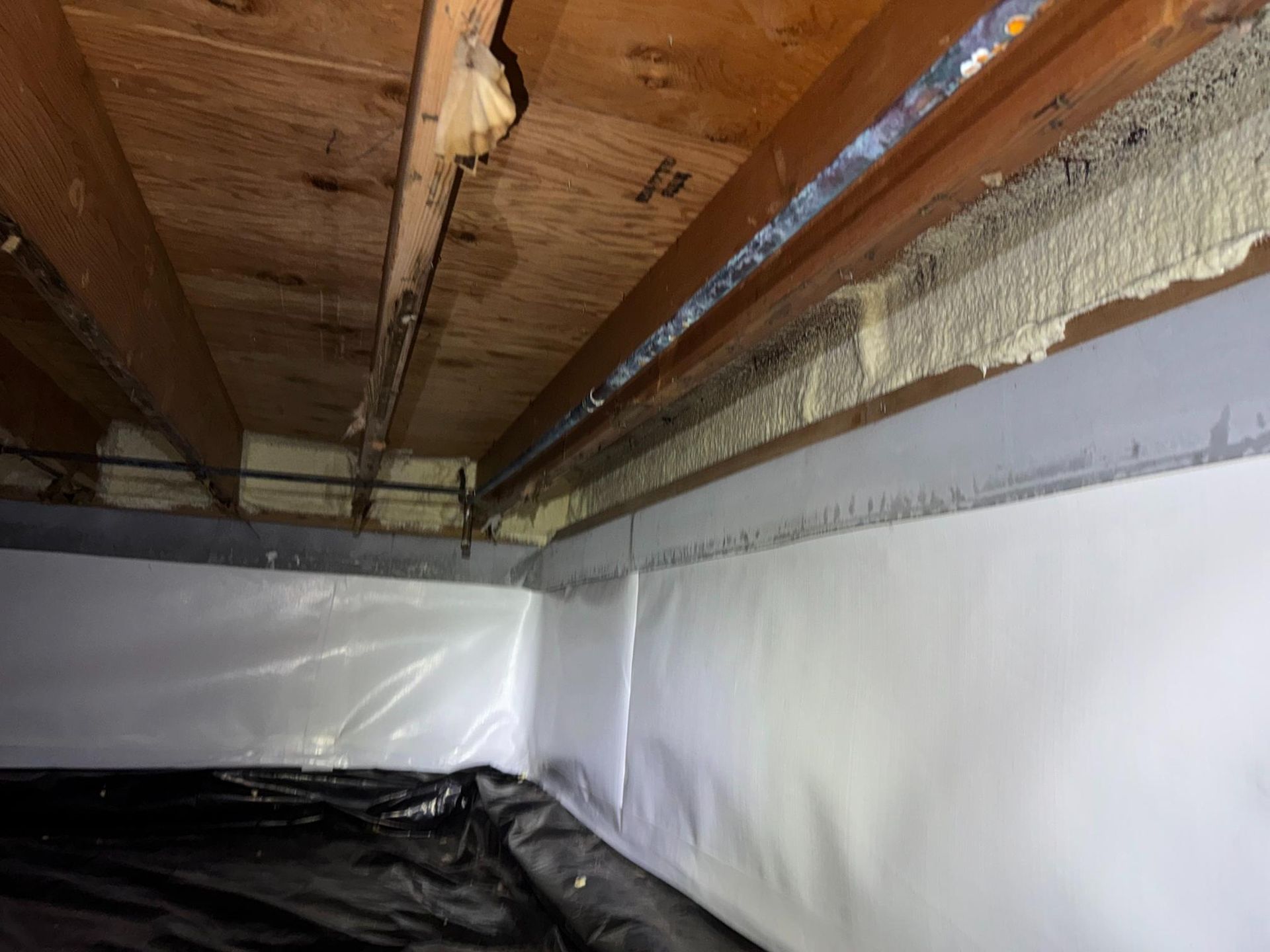
Every pier should be individually wrapped in vapor barrier. Not just the floor—every single concrete support.
All wiring should be nailed up along the joists, organized and out of the way. Not laying across the crawl space or draped over the vapor barrier.
The dehumidifier should be properly installed, running, and positioned where it can work efficiently. Ask what size it is and why that's right for your space.
Any HVAC condensate lines should be secured and draining properly. Not just hanging loose.
The space should be clean. No leftover materials, no trash, no tools left behind.
And here's the big one: your contractor should invite you to inspect the work. They should want to show you what they did. If they're rushing you through the final walkthrough or discouraging you from looking, that's a red flag.
Good work looks good. If a contractor won't show you the finished space, there's usually a reason.
Ask for photo documentation too. You're paying for this work—you deserve to see proof it was done right.
Why We Don't Rush in Central Illinois
When Chris and I are on day two of a job, we're not already thinking about the next appointment. We're focused on finishing the work in front of us correctly.
That's one advantage of being a small, local company. We're not trying to run five crews across three states. We're trying to do excellent work for our neighbors here in Central Illinois—St. Joe, Mahomet, Champaign, and the surrounding areas.
We live here. We've been here our whole lives. When we finish a job, we don't disappear to some corporate office in another state. We're right here in the community. Our reputation isn't just business—it's personal.
That means when we say a job is finished, it's actually finished. Every detail handled. Every pier wrapped. Every wire secured. The space clean and ready for the next 20 years.
We take pride in work that lasts. Not work that just passes a quick inspection and moves on. There's a difference, and homeowners can see it when they look at the finished product.
Book A Free Inspection Now
Your crawl space problems aren't going to fix themselves. But they are fixable. Let's get it done — the right way, permanently.
Or call us directly (217) 863-9559
Ready to See the Difference?
If you're dealing with crawl space moisture, humidity issues, or you just want to know what's actually happening under your house, give us a call.
We'll come out, do a thorough inspection, and show you exactly what we find. No pressure, no gimmicks. Just a clear explanation of what's going on and what we'd recommend.
And if we do the work, you'll see what finishing a job the right way actually looks like.
Reach out anytime. We're here in Mahomet, serving Central Illinois.