
The Final Walkthrough: What 'Done Right' Means in Crawl Space Work
When We Say We're Done, Here's What That Means
We just wrapped up a crawl space encapsulation here in St. Joe, and I wanted to walk you through what the finished product actually looks like.
Not "technically done." Not "good enough." Actually finished.
Because here's the thing: a lot of homeowners never see their completed crawl space. They trust the contractor when they say it's done, write the check, and hope for the best. But there's a big difference between a crew that rushes through the last 10% and one that finishes every detail.
Those details matter. They're what make the difference between a crawl space that protects your home for decades and one that starts having problems in a year or two.
So let's talk about what you should actually see when a crawl space encapsulation is complete—and what it means when those details get skipped.
The Vapor Barrier: More Than Just White Plastic
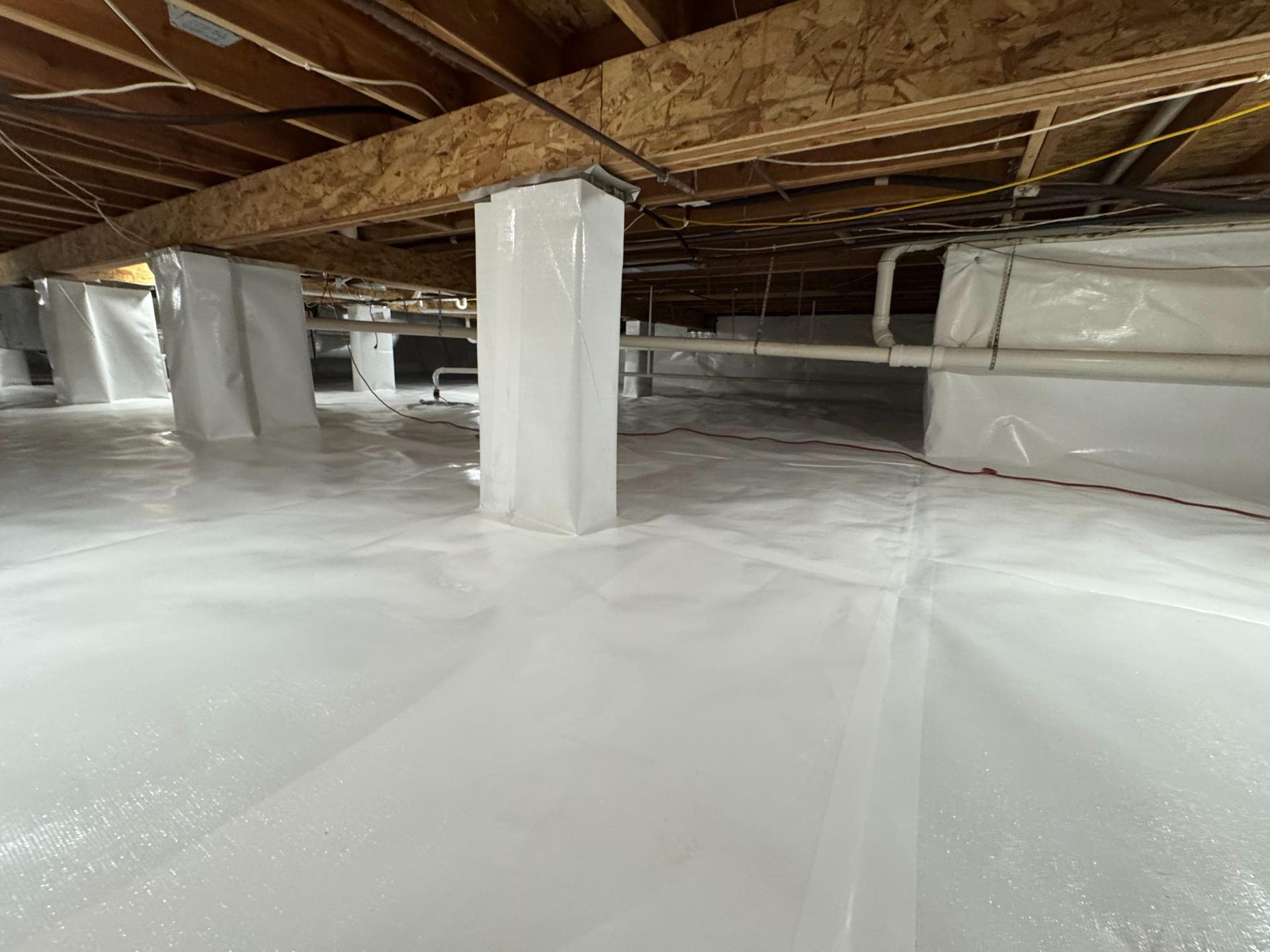
The vapor barrier looks simple. Clean white plastic covering the ground. But the installation details are what make it actually work.
First, the material should be smooth and properly fitted—not wrinkled, bunched up, or pulling away from the walls. If it looks sloppy, it probably is.
Second, and this is huge: every seam needs to be taped. Not just overlapped. Actually taped with proper seam tape. That's what creates the seal that keeps moisture out. When contractors skip this step and just overlap the plastic, you've got gaps where moisture can still get through.
Third, the piers need to be wrapped. Those support columns aren't just sitting there—they're part of your foundation system. Wrapping them protects them from moisture damage and completes the sealed environment.
Here in St. Joe, you can see all the seams are taped, piers are wrapped, and the barrier is installed clean and tight. That's not extra. That's what a vapor barrier installation should look like.
When these details get skipped, the system doesn't work right. You'll start seeing moisture intrusion, usually along those untaped seams or around unwrapped piers. And by the time you notice, you're dealing with bigger problems.
Spray Foam: The Part Most Homeowners Never Check
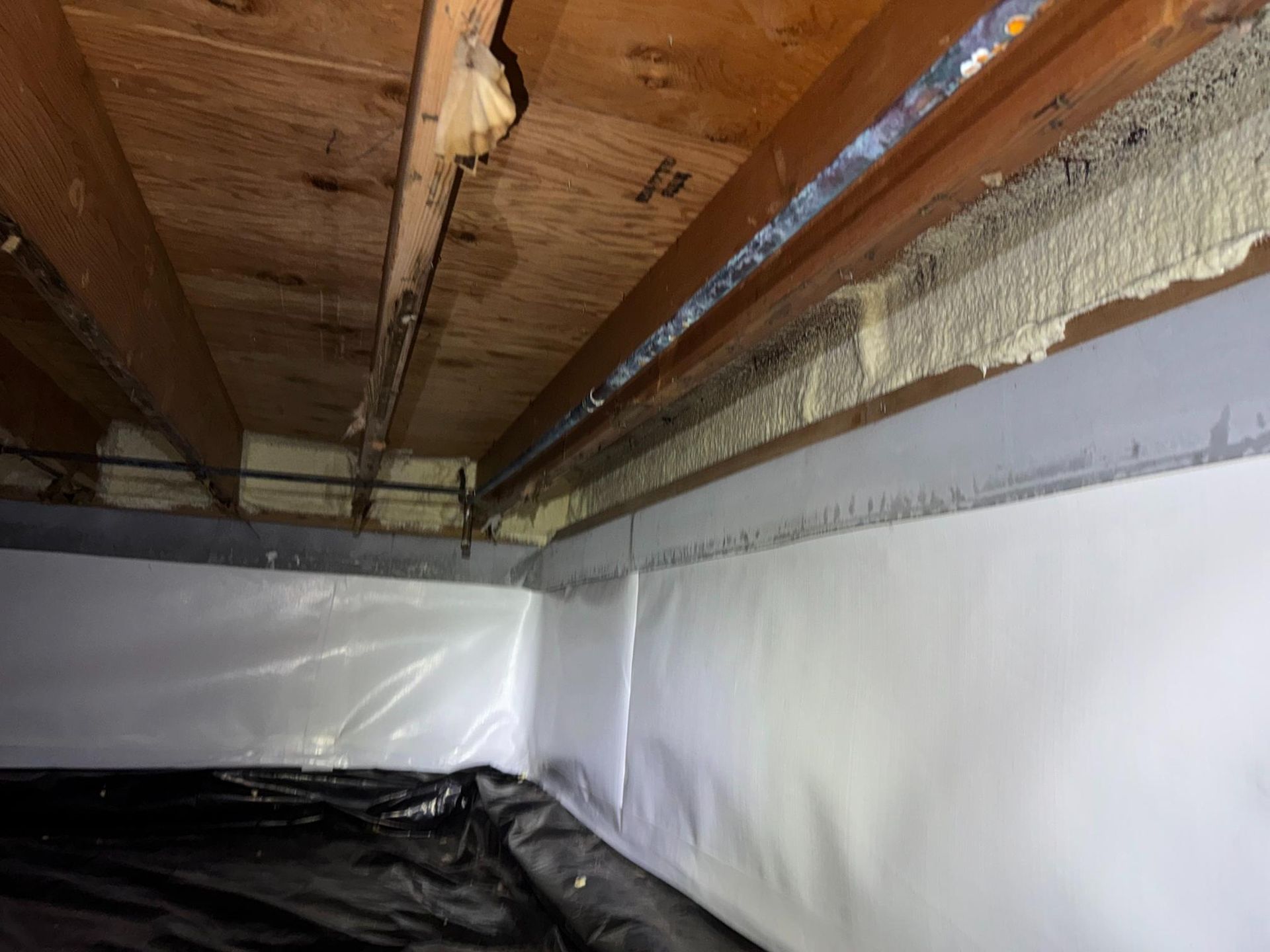
Look up at the rim joists in this crawl space. See that spray foam sealing the entire perimeter where the house sits on the foundation? That's not optional if you want a system that actually works.
Here's what rim joist spray foam does: it stops outside air from getting into your crawl space. Without it, you've got gaps all around the perimeter where air, moisture, and temperature swings can get in. Your encapsulation might look good on the ground, but if the rim joists aren't sealed, you haven't actually created a sealed environment.
This matters more than most people realize. Outside air brings humidity in summer and cold in winter. That affects your floor temperature, your HVAC efficiency, and your overall moisture control. The dehumidifier you just paid for has to work twice as hard because it's fighting against constant air infiltration.
Some contractors will tell you "you don't really need that" or try to make it an add-on. That's a red flag. If they're doing a proper encapsulation, the rim joists need to be sealed. Period.
When we finish a job, every inch of rim joist is spray foamed. You can walk the perimeter and see complete coverage. No gaps, no "we'll come back and do that," no cutting corners because it's harder to reach in some spots.
That's what sealing a crawl space actually means—sealing all of it, not just the easy parts.
The Dehumidifier System: Installation Details That Matter
The dehumidifier is the heart of your moisture control system. But how it's installed makes all the difference.
In this St. Joe crawl space, you can see the dehumidifier is properly hung on the wall—not just sitting on the ground. That's important because ground placement can lead to problems with drainage, efficiency, and longevity.
Look underneath it. See that condensate pump? That's what removes the water the dehumidifier pulls out of the air. And it's not just draining onto the ground or into a bucket you have to empty. It's properly plumbed all the way back to the sump pump.
That drainage path matters. When condensate pumps aren't connected correctly, they either overflow, drain onto your vapor barrier creating puddles, or the dehumidifier shuts off because it can't drain. Then you've got a system that doesn't work, and moisture problems start coming back.
We see this all the time: dehumidifiers that were "installed" but not set up to actually function long-term. The homeowner doesn't realize there's a problem until they start smelling musty air again or see water pooling in the crawl space.
When a dehumidifier is installed right—hung properly, condensate pump working, drainage connected correctly—it runs continuously without any attention needed. That's what you're paying for. A system that works, not just equipment that's present.
Lighting Throughout: Not Just One Bulb
Notice the lights installed throughout this entire crawl space? That's not for looks.
Most contractors will put one bulb near the access point and call it done. But here's why that's not enough: someone will need to work in this crawl space eventually. Your HVAC tech, your plumber, a home inspector, maybe a pest control company. When they can't see what they're doing, service calls take longer, cost more, and problems get missed.
Proper lighting means the entire space is visible. You can see your ductwork, your plumbing, your floor joists, your dehumidifier—everything. No dark corners where issues can hide.
It also makes future inspections actually useful. A home inspector who can see clearly can give you a real assessment. One who's working in the dark with a flashlight? They're doing a quick look and getting out.
Good lighting throughout tells you something about the contractor's standards. They're setting up the space to be functional long-term, not just checking a box so they can move on to the next job.
The Cleanup Standard: Final Details
When we say "final cleaning," we mean the space is actually clean. Not just "the big stuff is done." Actually finished.
No leftover materials. No debris. No tools someone forgot to grab. No plastic balled up in a corner because they didn't want to bag it up. Everything is removed and hauled away.
The space should be walkable. You should be able to move through it without stepping over piles of old insulation or tripping on leftover scraps. If you wanted to store something down there, you could.
This matters because your crawl space isn't a hidden storage area for contractor waste. It's part of your home's foundation system. When it's left messy, that debris breaks down over time, affects your air quality, and creates problems for anyone who needs to work down there later.
We spent extra time on cleanup today because that's part of doing the job right. The transformation isn't complete until the space is clean, functional, and ready to protect this home for years to come.
That's the standard. Not "good enough to cover up and forget about." Actually finished.
What This Means for Your Home Long-Term
When crawl space encapsulation is done correctly—vapor barrier sealed, rim joists sprayed, dehumidifier working, lighting installed—this St. Joe homeowner won't have moisture problems again.
That means no more musty smells coming up through the floors. No mold concerns. No wood rot eating away at floor joists. The structural integrity of their home is protected.
Their HVAC system will run more efficiently because it's not fighting against moisture and temperature swings from below. Their floors will feel more comfortable. The air quality throughout the house improves because they're not pulling damp air up from an unsealed crawl space.
And when they need future maintenance—plumbing work, HVAC service, electrical repairs—those service calls will be easier and faster because contractors can actually see what they're doing in a clean, lit space.
Five years from now, ten years from now, this crawl space will still be doing its job. That's what proper work buys you: long-term protection and peace of mind. Not just a quick fix that looks good for a few months.
Book A Free Inspection Now
Your crawl space problems aren't going to fix themselves. But they are fixable. Let's get it done — the right way, permanently.
Or call us directly (217) 863-9559
Schedule Your Crawl Space Inspection
If you're dealing with moisture issues, musty smells, or you just want to know what's actually happening under your house, give us a call.
We'll come out and do a thorough inspection. We'll show you exactly what we find—with photos and video, not just a verbal explanation. And we'll tell you what needs to be done to actually fix it, not just sell you the biggest package.
No pressure. No gimmicks. Just honest assessment from someone who's been doing this work for years and cares about getting it right.
Reach out anytime. We're here in Mahomet, serving St. Joe and all of Central Illinois.