The Problem with Partial Crawl Space Fixes (And Why They Cost More Later)
When a Quick Fix Becomes a Bigger Problem
We're in Charleston today doing an assessment for a homeowner who did what a lot of people do—they tried to fix their crawl space water problem themselves.
They dug a sump pit near the access point, let the natural grade direct water toward it, and it helped. It really did. But standing water's still pooling in the back corners after every rain. And now there's mold growing on the floor joists that's tested positive and needs professional remediation.
Here's the thing: I completely understand why homeowners try partial fixes. Professional crawl space work isn't cheap, and a DIY sump pit feels like a smart way to solve the problem for less money.
But what we're seeing in this crawl space is what happens when a temporary solution runs into a permanent problem. The water didn't go away. It just moved. And now the fix is bigger than it would've been.
What This Homeowner Tried (And Why It Helped... Sort Of)
The homeowner installed a small sump pit right by the crawl space entrance. They positioned it where water naturally flows, which is smart. And it does catch a lot of the water that comes in during heavy rain.
That's not nothing. A DIY sump pit can absolutely reduce standing water in certain areas of your crawl space. This one probably prevented several inches of flooding near the access point.
But here's the limitation: water doesn't just flow to one spot. It follows grade, settles in low areas, and finds corners that a single sump pit can't reach. In this crawl space, you can see standing water in the back after a good rain because there's no perimeter drain system to capture it and direct it to the pump.
So the homeowner spent time and money on a solution that helped but didn't solve. They're still dealing with water. They're still dealing with humidity. And now they're dealing with mold that wouldn't have grown if the moisture problem had been fully addressed from the start.
It's not that the DIY approach was wrong—it just wasn't complete.
The Problems a Partial Fix Can't Solve
When you walk through this crawl space, the evidence is everywhere.
There's a waterline around the base of the foundation walls—that dark staining you see about six inches up. That's not from one rain. That's from repeated standing water over time. You see the same staining on the piers, confirming water's been pooling throughout the space, not just near the sump.
And then there's the mold. Those little freckles on the floor joists tested positive. The homeowner called in a mold remediation company, but here's what they learned: you can't treat mold in a crawl space until you fix the moisture problem first. The remediation won't work if humidity levels stay high. So now they're stuck—they can't address the mold until we get the water and humidity under control.
This is the cycle that happens with partial fixes. Water pools. It evaporates. Humidity rises. Mold grows. And even though the sump pit is catching some water, it's not catching enough to break that cycle.
The real issue isn't just standing water you can see after a rain. It's the humidity that stays elevated between rains. It's the moisture trapped in the soil under an unsealed crawl space. It's the water that finds its way into corners a single sump can't reach.
Managing water isn't the same as solving drainage. And this crawl space shows exactly what happens when you're only doing one of those things.
What a Complete Solution Actually Includes
So what does it take to actually solve a crawl space water problem?
First, a perimeter drain system. Not just a sump pit in one spot, but drainage installed around the entire crawl space that captures water at every entry point and directs it to the pump. That way, water doesn't get a chance to pool anywhere—it's intercepted before it becomes standing water.
Second, a proper sump pump system. Not just a hole in the ground, but a basin positioned at the lowest point with a reliable pump and backup power. Because the pump only works if water can actually reach it.
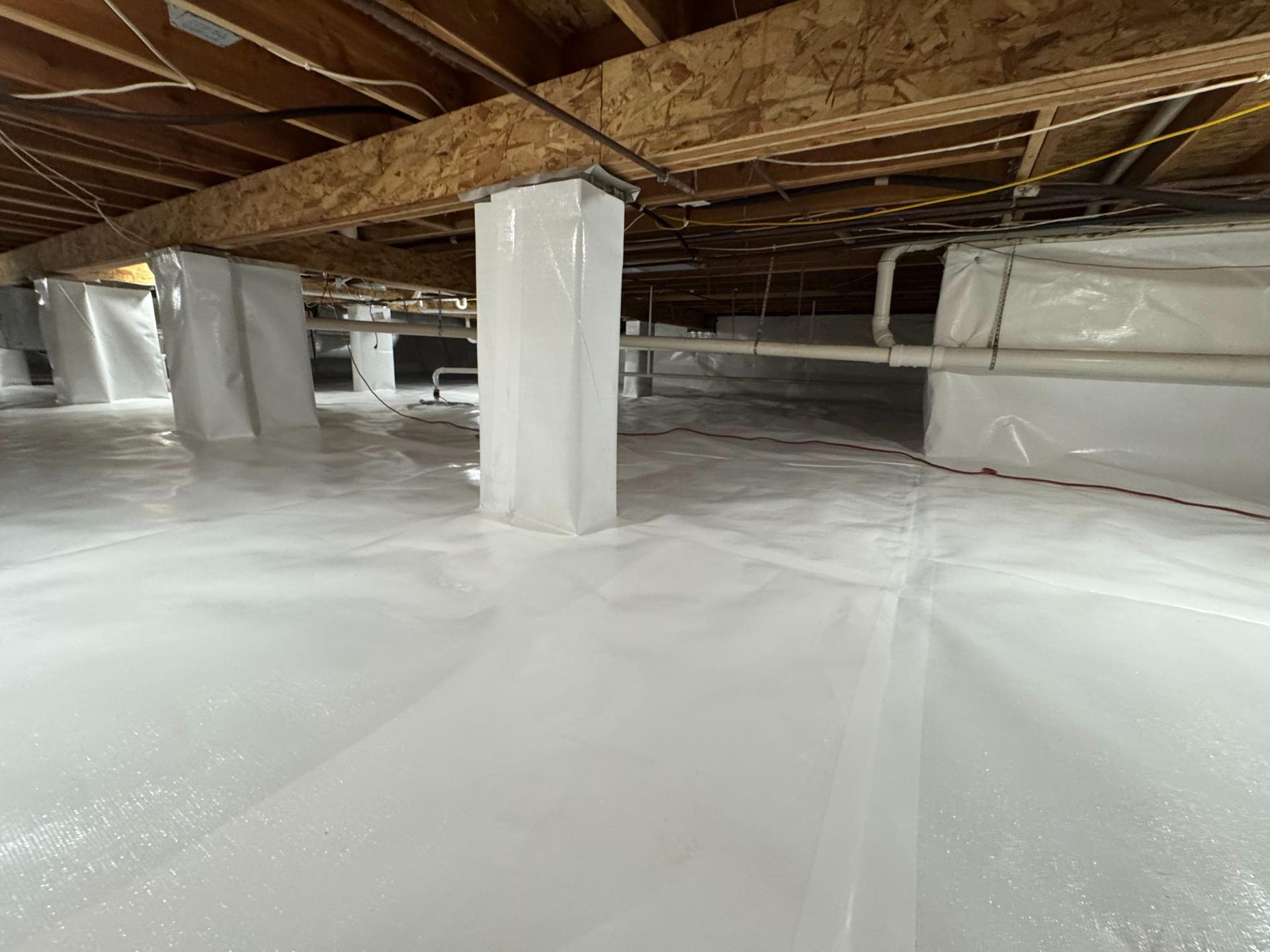
Third, full encapsulation with a heavy-duty vapor barrier. This seals the crawl space floor and prevents ground moisture from evaporating into the air. That's what brings humidity levels down for good.
Fourth, a dehumidifier. Even with encapsulation, you need active humidity control to maintain healthy levels year-round.
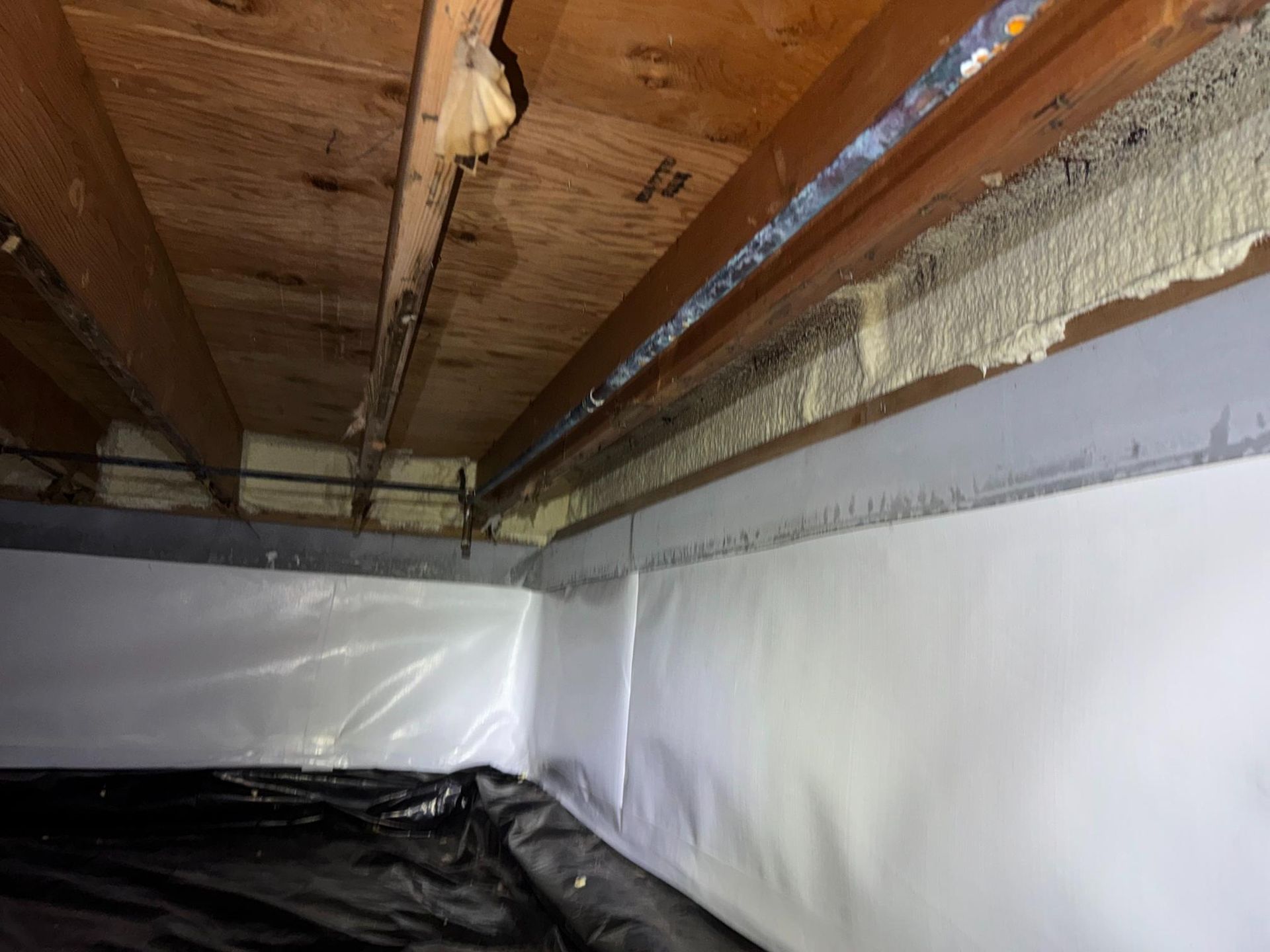
Fifth, sealed crawl space vents and spray foam insulation at the rim joists. Open vents bring in humid outside air, which defeats the whole system. Sealing everything creates a controlled environment.
Each of these pieces works together. The drainage stops water from pooling. The encapsulation stops ground moisture. The dehumidifier controls the air. The sealed vents keep humidity from coming back in.
That's the difference between addressing symptoms and solving the root cause. One manages the problem. The other eliminates it.
Why Partial Fixes End Up Costing More
Here's the math nobody wants to hear: spending less now usually means spending more later.
This homeowner invested time and money into a DIY sump pit. Now they're looking at a full perimeter drain system, encapsulation, dehumidifier, and mold remediation. If they'd done the complete solution up front, they wouldn't be paying for mold treatment at all.
But it's not just about the remediation costs. Standing water and high humidity damage your home over time. Floor joists weaken. Insulation deteriorates. Your HVAC system works harder trying to control humidity that's constantly rising from below. Energy bills go up.
And there's the time cost. How many times do you want to crawl under your house checking for water? How many temporary fixes do you want to try before admitting the problem needs a real solution?
I get it—professional crawl space work is an investment. But so is buying time with partial fixes that don't last. And when you add up the DIY attempts, the ongoing problems, and the eventual full repair, you've spent more than if you'd just done it right the first time.
Sometimes the expensive solution is actually the cheaper one.
How to Know If Your Crawl Space Needs More Than a Quick Fix
If you're not sure whether your crawl space problem needs a complete solution or just some maintenance, here's what to look for:
Check after a heavy rain. If you're still seeing standing water anywhere in the crawl space, your current system isn't handling the load.
Look for waterlines or staining on foundation walls and piers. That's evidence of repeated flooding, not just a one-time issue.
Pay attention to smells. If your crawl space smells musty or damp, you've got ongoing moisture problems even if you don't see standing water.
Notice if problems keep coming back. If you've tried multiple fixes and water still shows up, you're treating symptoms instead of causes.
Check your humidity levels. If a dehumidifier runs constantly and humidity still stays high, ground moisture is the issue.
Ask yourself: how many times have I dealt with this? If the answer is more than once, it's time for a real assessment. Standing water problems don't fix themselves, and they don't get better with time. They get worse.
What We're Seeing in Central Illinois Crawl Spaces
This Charleston crawl space isn't unique. We see this pattern constantly throughout Central Illinois.
Our heavy spring rains saturate the ground. Water finds its way into crawl spaces through foundation walls, under footings, anywhere it can seep in. And our soil composition—a lot of clay in this area—means water doesn't drain quickly. It sits.
Homeowners in Mahomet, Charleston, Champaign, and the surrounding communities deal with the same issues. A crawl space that's fine most of the year turns into a pool after two days of rain. Sump pits help during the worst of it, but they're not solving the underlying drainage problem.
That's why proper perimeter drainage changes everything. It intercepts water before it becomes a problem, regardless of how much rain we get or how saturated the ground is.
Chris and I have lived here our whole lives. We know this area's weather patterns, we know the soil, and we know what works long-term versus what just buys you another season. Our solutions are built for Central Illinois conditions—not some generic approach that works in drier climates but fails here.
Book A Free Inspection Now
Your crawl space problems aren't going to fix themselves. But they are fixable. Let's get it done — the right way, permanently.
Or call us directly (217) 863-9559
Get a Real Assessment
Let's Figure Out What Your Crawl Space Actually Needs
If you're dealing with standing water, humidity, or crawl space issues that keep coming back, let's take a look.
We'll do a free inspection and show you exactly what's happening under your house. You'll get honest feedback about whether a DIY approach makes sense or if you need a complete solution. No pressure to do everything at once—sometimes phased approaches work.
But you deserve to know the full picture so you can make the right decision for your home and your budget.
Give us a call. Chris or I will be there personally.