
What Is Dimple Mat and Why Does It Matter in Crawl Space Encapsulation?
The Layer You've Never Heard Of (But Should Know About)
We're on day one of a crawl space encapsulation over in St. Joe, and I'm getting asked the question I hear all the time: "What is dimple mat?"
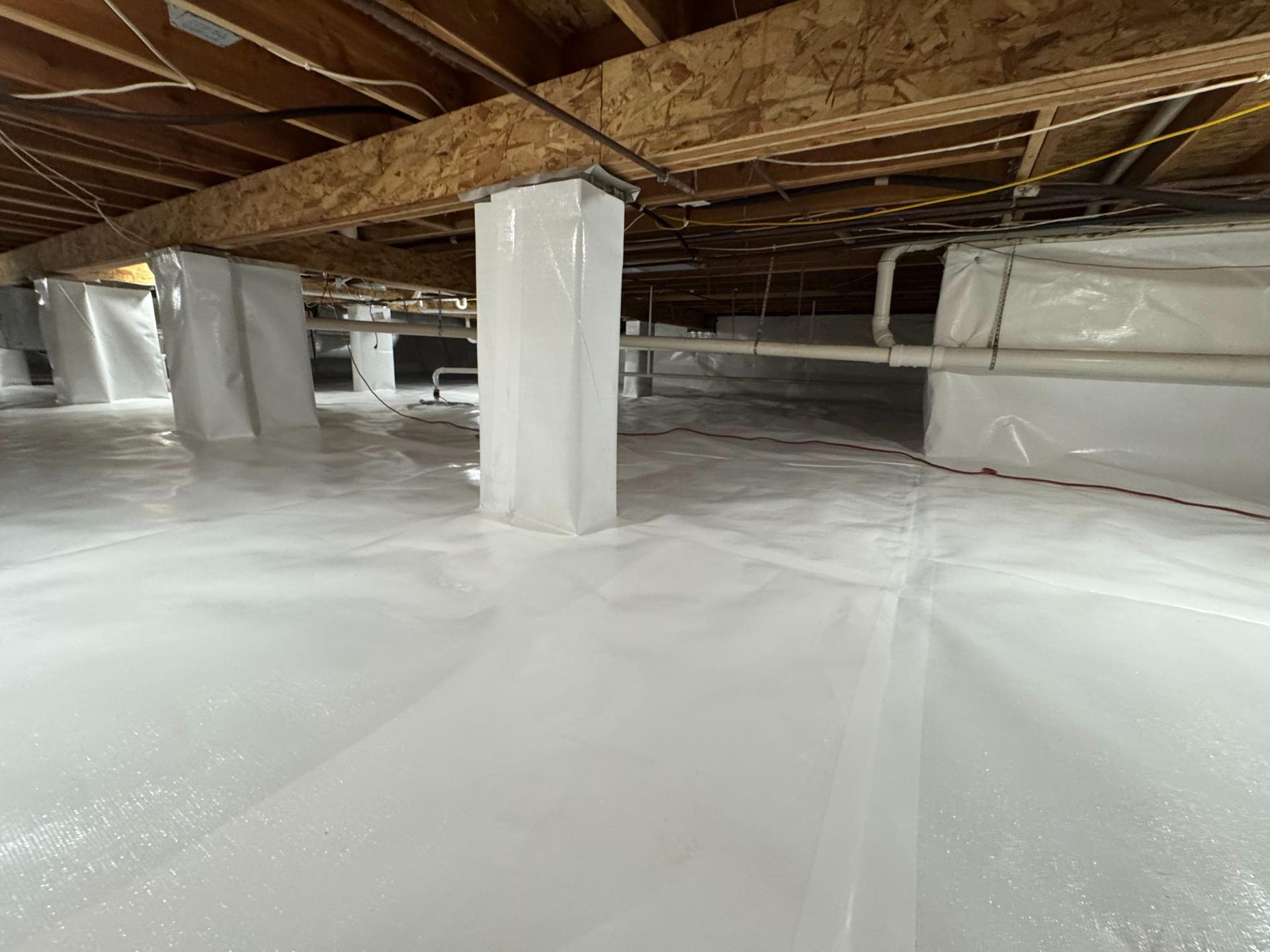
If you look at the floor of this crawl space right now, you'll see this textured material with little raised bumps all over it. That's dimple mat. And while it might look like just another layer we're putting down, it's actually solving a problem most homeowners don't even know they have.
See, a lot of crews will come in and just lay plastic directly on your crawl space floor. Seal it up, collect the check, done. But what happens when ground water pushes up? Where does it go?
Dimple mat gives it somewhere to go. And that makes all the difference between a crawl space that stays dry and one that develops problems down the road.
What Dimple Mat Actually Is
If you've never seen dimple mat before, here's what you're looking at: it's a plastic mat covered in small raised dimples—kind of looks like bubble wrap's tougher cousin.
Those dimples aren't just for texture. They act like little feet that hold the mat up off the ground. When we lay it down, there's an air space underneath between the mat and the dirt. And all those dimples create channels where air and water can move.
Think of it like a highway system for moisture. Instead of water pooling in one spot with nowhere to go, it can travel through those channels to your drainage system.
Most contractors skip this step entirely. They'll lay a vapor barrier straight on the dirt and call it encapsulated. And sure, that might work fine—until ground water pushes up and has nowhere to go. Then you've got pressure building under your barrier, moisture getting trapped, and problems you thought you solved coming back.
Dimple mat costs a little more and takes a little longer to install. But it's the difference between hoping water doesn't show up and having a plan for when it does.
The Problem It Solves
Here's the reality in Central Illinois: we've got ground water. It's not a matter of if moisture is going to push up from below—it's when and how much.
When you seal a crawl space without accounting for that, you're basically trapping water underneath your vapor barrier. It builds pressure. It finds weak spots. It creates exactly the kind of humid, damp environment you were trying to get away from.
In this St. Joe job, the homeowner's been dealing with water along the back wall of their house. So we installed a 35-foot drain system along that problem area. That drain connects to a sump pump in the back corner that'll pump the water out.
But here's where dimple mat makes the system work: if water pushes up anywhere else in the crawl space, those channels underneath the mat give it a path to that drain. Instead of pooling or getting trapped, moisture can move through the dimple mat, reach the drainage system, and get pumped out.
Without dimple mat, you're gambling that water will only show up exactly where you installed the drain. With it, you've got coverage across the entire floor. The whole system is connected.
This is what I mean by thinking three steps ahead. We're not just solving today's water problem. We're building a system that handles moisture properly for the next twenty years.
How It Fits Into the Complete System
Dimple mat doesn't work alone—it's one piece of a complete moisture management system.
Here's how the layers stack up: First, we install drainage where it's needed. In this case, 35 feet along the back wall where water's been coming in. That connects to the sump pump.
Then the dimple mat goes down across the floor, creating that air gap and channel system. It covers the entire crawl space, not just the problem areas, so moisture can move from anywhere to the drain.
Over the dimple mat, we'll install a thick white vapor barrier—that's the final seal that actually stops moisture from rising into your crawl space air. But because there's dimple mat underneath, any water that does push up has somewhere to go instead of building pressure against that barrier.
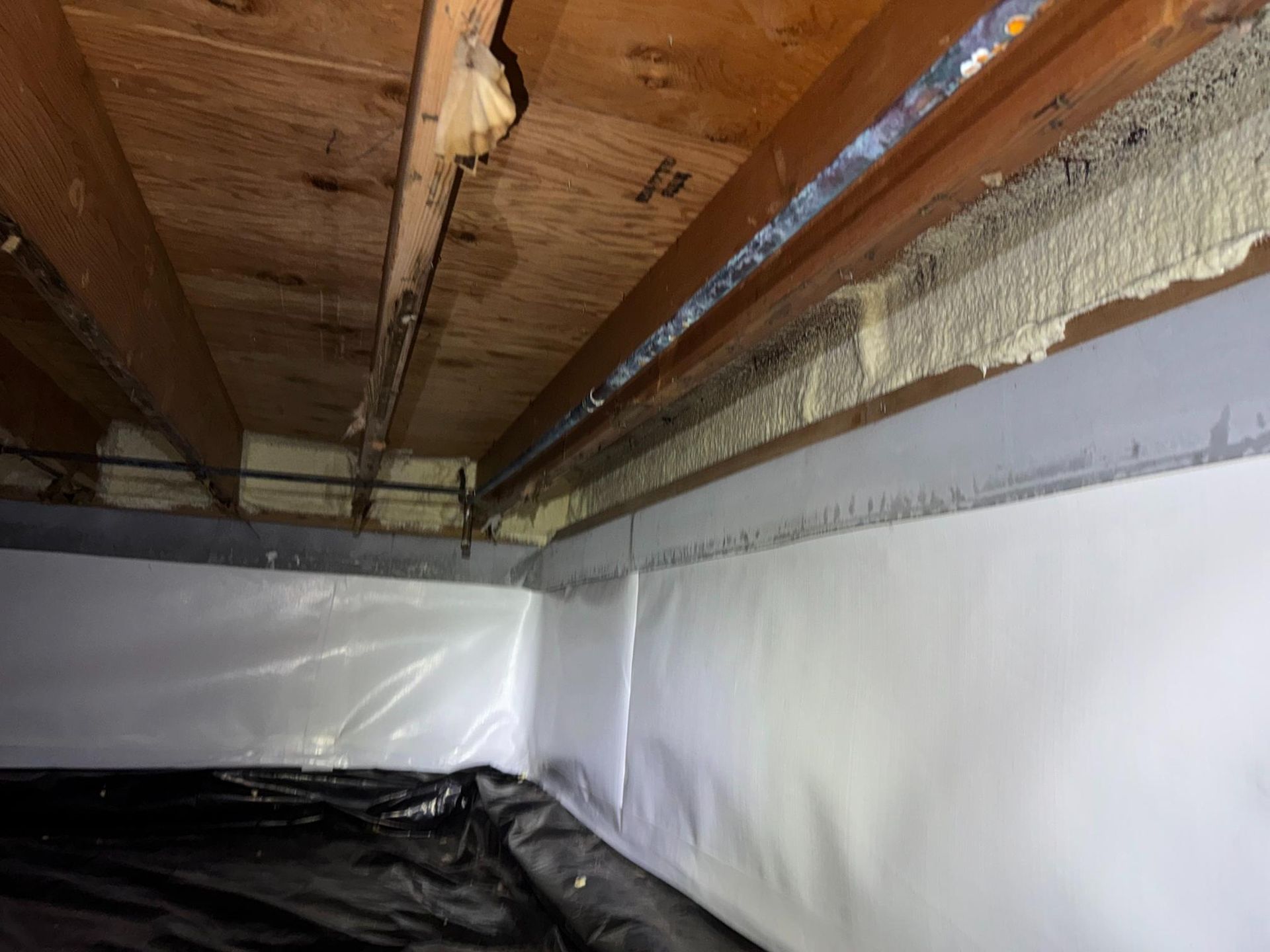
Add in the dehumidifier we're installing tomorrow, and you've got active moisture control for the air itself. The sealed walls keep outside moisture from coming through. The spray foam we're doing on the rim joists stops air leaks that could bring in humidity.
Every piece supports the others. The drainage moves bulk water. The dimple mat creates pathways. The vapor barrier seals it off. The dehumidifier controls air moisture. The spray foam stops infiltration.
Remove any one of those pieces, and the system is weaker. That's the difference between encapsulation done right and just laying plastic down.
What Day One of Quality Work Looks Like
If you could see this St. Joe crawl space right now, you'd see controlled chaos that's actually organized progress.
The piers are already wrapped. That protects them and gives us a clean surface to seal our vapor barrier against. The walls are going up—we seal those to stop moisture coming through the foundation. Lights are hung throughout so we can see what we're doing and so future contractors aren't working in the dark.
The drainage is in. Dimple mat is down. By this time tomorrow, we'll have the white vapor barrier sealed over everything, the dehumidifier installed and running, and all that old fiberglass insulation removed and replaced with spray foam in the rim joists.
This whole space will look completely different in 24 hours. Clean, bright, sealed, climate-controlled.
But here's the thing—this takes two full days of work. Not two hours. Not a quick afternoon. Anyone who tells you they can properly encapsulate a crawl space in a few hours is skipping steps. And those skipped steps are usually the ones that matter most.
Questions to Ask Your Crawl Space Contractor
If you're getting quotes for crawl space encapsulation, here are some questions worth asking:
Do you use dimple mat? In what situations? If they say they never use it or don't know what it is, that tells you something about their approach to moisture management.
How do you handle ground water after the space is sealed? There should be a real answer here—drainage systems, sump pumps, pathways for water to move. Not just "the plastic keeps it out."
Can you explain what each layer does and why it matters? A good contractor should be able to walk you through their system, not just hand you a price and expect you to trust them.
How long will the job take? If someone quotes you a half-day job for a full encapsulation, they're cutting corners somewhere. Quality work takes time.
Will you show me the finished work? This should be automatic. If a contractor doesn't want you inspecting their completed job, that's a red flag.
The way a contractor answers these questions tells you whether they're building a system or just trying to get to the next job.
Why We Build Systems, Not Quick Fixes
Chris and I have lived in Central Illinois our whole lives. We know the soil here. We know the water tables. We know what spring flooding does to crawl spaces in St. Joe and Mahomet.
That's why we don't take shortcuts. We've seen what happens when contractors rush through jobs or skip the "extra" steps like dimple mat or proper drainage. We've been called in to fix those problems, and it always costs the homeowner more than if it had been done right the first time.
When we design an encapsulation system, we're thinking about the next twenty years. Will this handle seasonal flooding? Will the drainage keep up? Is the system built to last, or just built to pass inspection?
We're owner-operated, which means we explain everything because we actually care about the outcome. You're not getting a sales pitch from someone who'll never see the job. You're getting Chris or me, and we'll be the ones doing the work.
That's why we take our time. Why we use dimple mat when it's needed. Why we build complete systems instead of quick fixes.
Book A Free Inspection Now
Your crawl space problems aren't going to fix themselves. But they are fixable. Let's get it done — the right way, permanently.
Or call us directly (217) 863-9559
Ready to See the Transformation?
If you're dealing with crawl space moisture, musty smells, or you just want to understand what's actually happening under your house, give us a call.
We'll do a thorough inspection and walk you through exactly what we find—and what we'd recommend to fix it. No pressure, no gimmicks. Just honest answers about your crawl space and what it needs.
Check back tomorrow if you want to see how this St. Joe job turns out. The transformation from day one to day two is always pretty dramatic.
My Guys Home Services