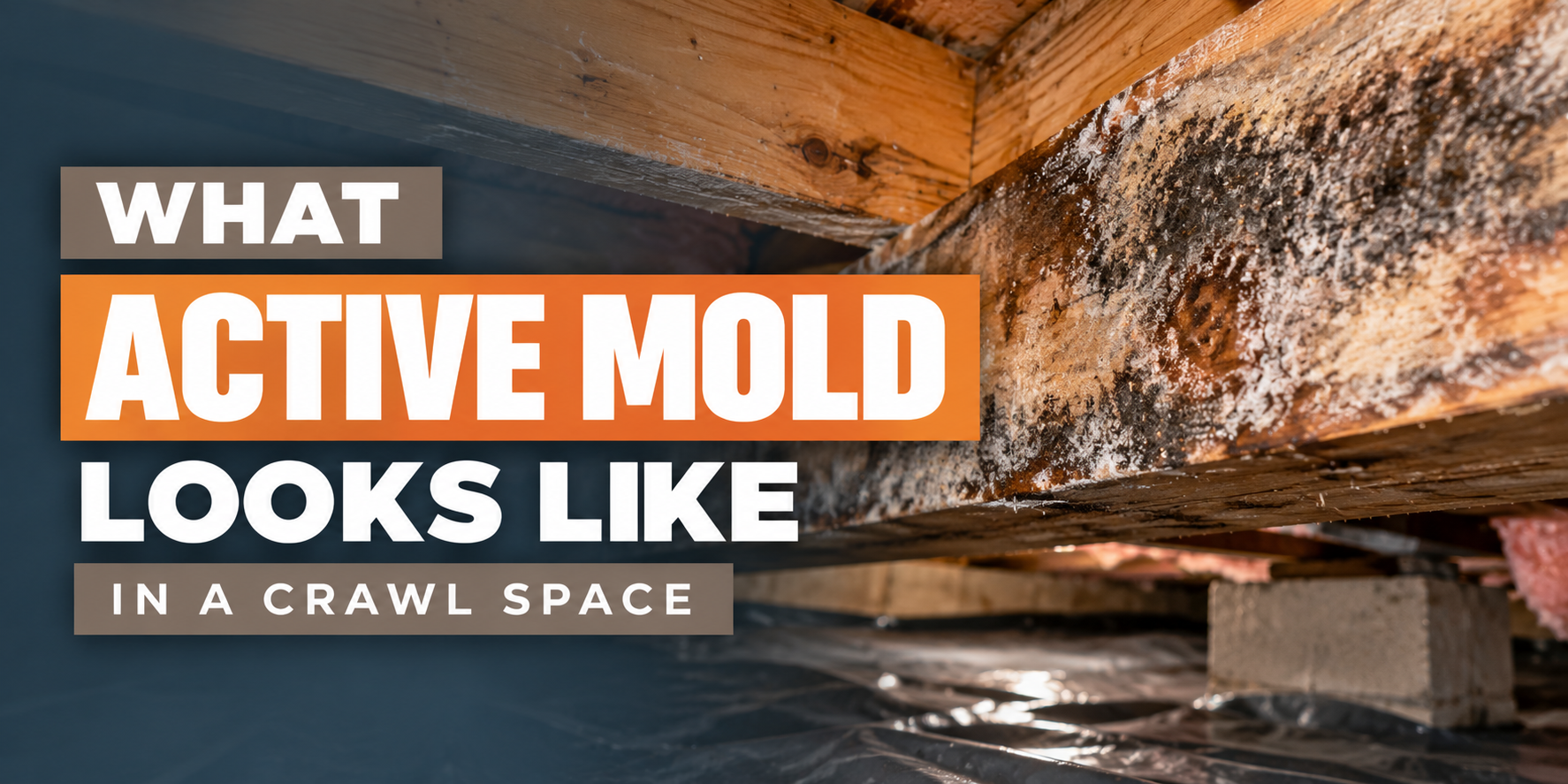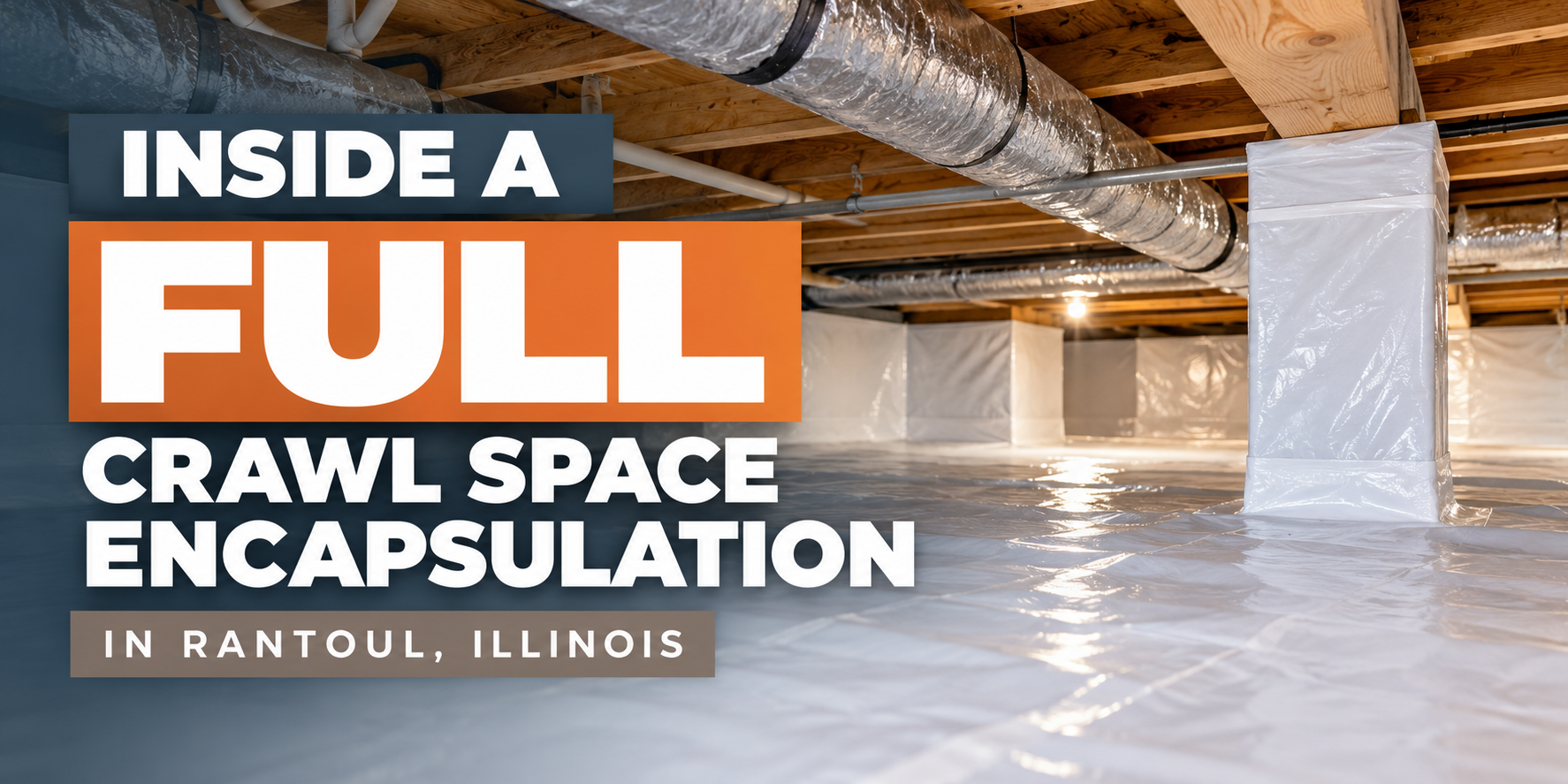
How a Crawl Space Drain System Actually Gets Installed
When a homeowner finally makes the call, something shifts.
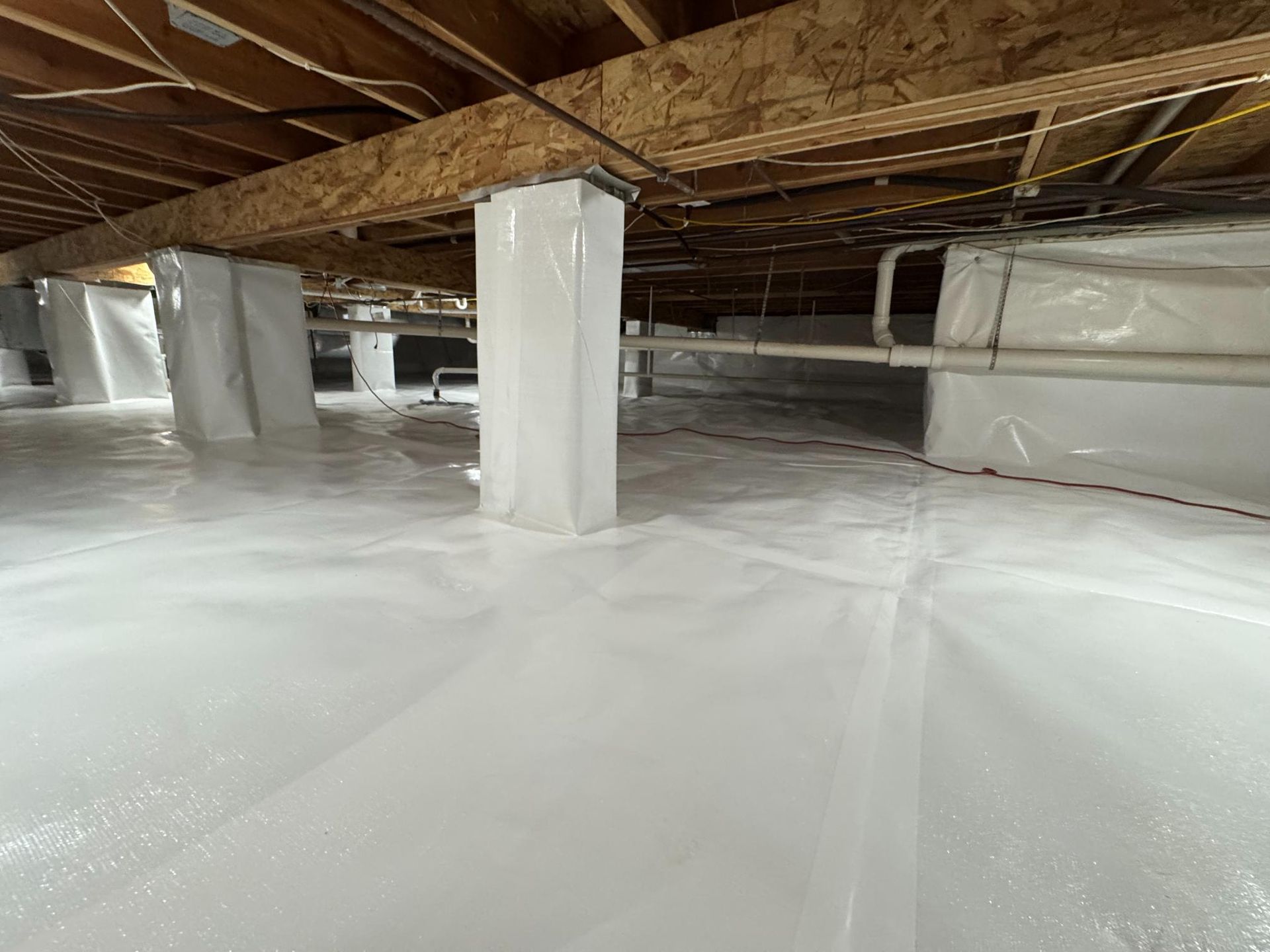
We come out and do a thorough inspection. We get under the home and look at everything — and we show you what we're seeing in real time so there are no surprises when we sit back down with you. You'll know exactly what's down there. You'll know exactly what it takes to fix it. And you'll have a clear picture of what your home looks like after the work is done.
No pressure. No scare tactics. Just an honest look at what's happening and a straightforward plan to address it.
Most homeowners tell us the same thing after that first visit.
They wish they hadn't waited as long as they did.
A Real Drainage Job, From the Ground Up
We're out here in Danville today with Ryan and Dylan, and we're about halfway through day one of a crawl space drainage installation.
Both downspout discharges are done. The trench is three quarters of the way around the perimeter. Dylan's in the back corner digging the sump pit where everything connects and drains out.
And here's the thing—the moment we started digging, the trench filled with water.
That right there tells you everything. You don't need fancy equipment or a complicated diagnosis. When the ground around your foundation is holding that much water, the drainage system isn't a maybe. It's a need.
This is what a real drainage job looks like from day one. No sales pitch. Just work.
What Told Us This Home Needed Drainage
Drainage problems rarely announce themselves all at once.
Most homeowners notice something small first. Maybe the yard stays soggy after rain longer than it should. Maybe there's a musty smell coming from the crawl space. Maybe the floors feel a little soft in certain spots. Maybe a home inspector flagged moisture under the house and the homeowner filed it away as "something to deal with later."
By the time those signs show up, the problem has usually been building for years.
Water always finds the path of least resistance. If your downspouts, yard grading, or soil aren't directing it away from your home, it moves toward your foundation instead. Then under it. Then it sits there, against your floor framing, raising humidity levels, feeding mold, and slowly doing damage that compounds over time.
The trench filling with water the moment we broke ground in Danville wasn't a surprise to us. It was confirmation. This home had been holding water it had no business holding, and it needed somewhere for that water to go.
That's exactly what we're building.
How a Crawl Space Drain System Works
A crawl space drain system sounds complicated. It's really not. Here's what it actually involves, in plain terms.
The Trench
We dig a trench around the perimeter of the crawl space, right along the interior of the foundation wall. This is where water that gets in has somewhere to go instead of just sitting there.
Drain Tile
Inside that trench goes a perforated pipe—what we call drain tile. Water seeps into it and gets directed toward one central point: the sump pit.
Dimple Mat
Along the foundation walls, we install dimple mat. It's a textured plastic sheeting that creates a small gap between the wall and the vapor barrier. Any water coming through the wall runs down behind it and into the trench rather than pooling on your crawl space floor.
The Sump Pit and Pump
Everything flows to the sump pit—a hole dug in the lowest point of the crawl space where all the water collects. The sump pump sits inside it and automatically pumps that water out through a discharge line that runs it away from your home entirely.
Downspout Discharges
We also tie in your downspouts so roof runoff gets directed away from the foundation instead of dumping right next to it.
Every piece of this system works together. Remove one component and the whole thing is less effective. That's why we install it right the first time.
What the Installation Process Actually Looks Like
Here's what day one looked like on this Danville job.
We started with the downspout discharges first. Both are now complete and tied in. That's the exterior side of the equation handled before we even got into the crawl space.
From there, Ryan started on the trench. Working methodically around the perimeter, digging at the right depth and width to properly seat the drain tile. By the time we shot this update, three quarters of the trench was done.
Meanwhile Dylan is in the back corner of the crawl space digging the sump pit. That's the lowest point where everything connects. It's not glamorous work—digging in a tight, dark space isn't anyone's idea of a good time—but it's one of the most important parts of the system.
Tomorrow we'll have the drain tile laid and the dimple mat installed. From there it's the sump pump, the final connections, and cleanup.
Most homeowners never see any of this. They get a finished crawl space and a bill. We think that's backwards.
This is your home. You should know what went into it, what was installed, and why each piece is there. That's why we document as we go—photos, video updates, walkthroughs at every stage. So when we hand you a finished product, you understand exactly what you paid for and why it works.
What Homeowners Should Know Before Hiring
Not every drainage contractor installs these systems the same way. Here's what to look for before you hire anyone.
Ask what's included. A complete system should have drain tile, dimple mat, a properly sized sump pump, and downspout integration. If someone is quoting you just a sump pump without addressing where the water is coming from, that's a partial solution.
Ask how they diagnose the problem. A good contractor should be able to show you—not just tell you—why drainage is needed. If the trench fills with water the moment they dig, that's your answer. If they can't explain the root cause clearly, that's a red flag.
Ask what the finished space will look like. When the job is done, your crawl space should be clean. Materials hauled out. Workspace cleared. The system visible and accessible for future maintenance.
Ask if you'll get documentation. Photos and video throughout the process aren't extras—they're how you know the work was done right.
And finally: ask who will actually be on your job. With us, the answer is Jeff or Chris. Every time.
Why This Work Matters Long Term
Here's what happens when a drainage problem gets ignored.
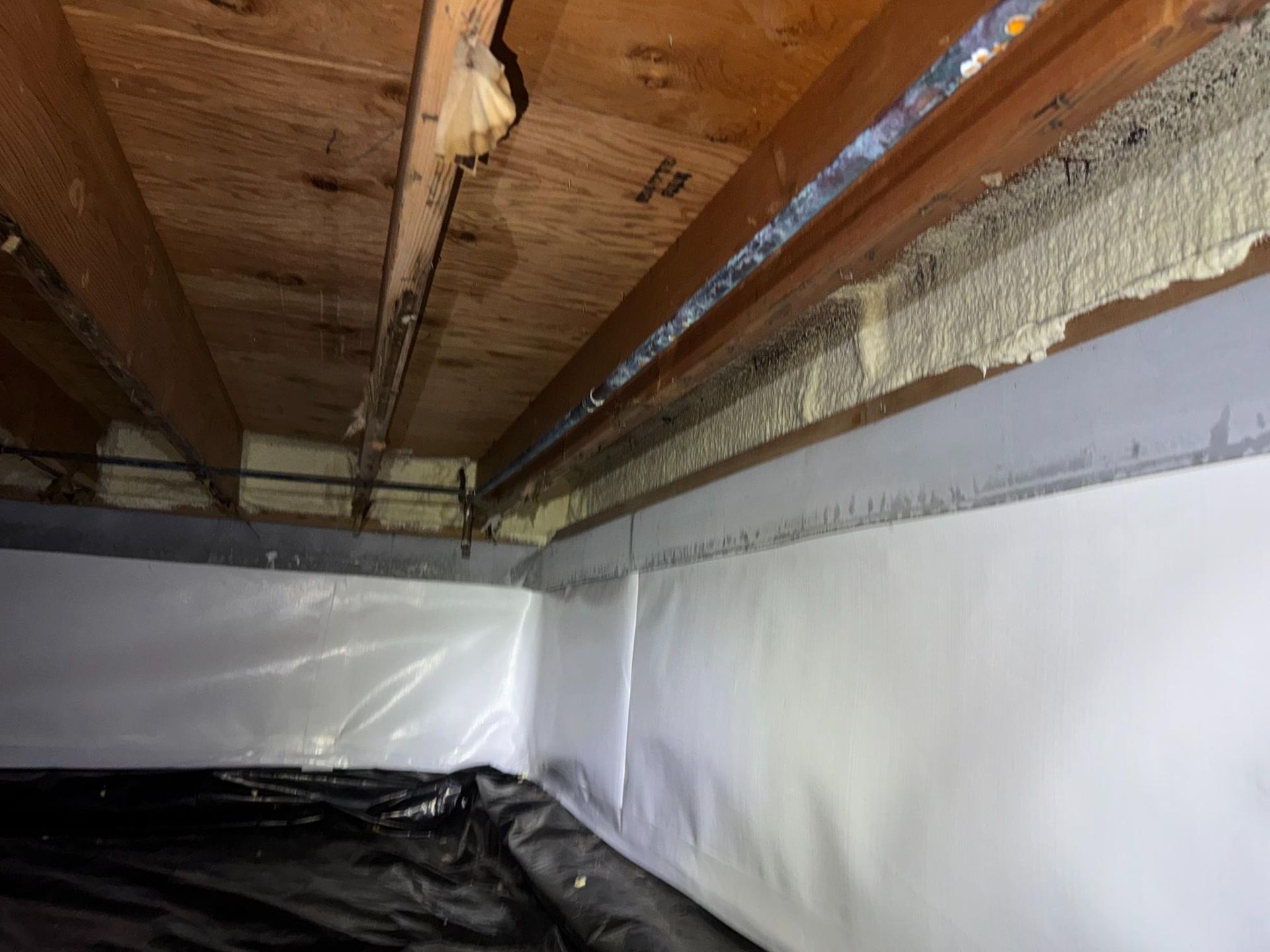
The water keeps coming. It sits against your foundation, raises the humidity in your crawl space, and creates the exact conditions that mold and wood rot need to thrive. Your floor joists start to soften. Your floors start to feel spongy. The air quality in your home drops because that damp, musty air from below is making its way upstairs.
And the longer it goes, the more expensive it gets.
A proper drainage system stops that cycle completely. Water gets redirected before it ever has a chance to sit against your foundation. Humidity levels drop. Your floor framing lasts longer. The air your family breathes gets cleaner.
We've seen what happens to homes that waited too long. Damaged joists, significant mold growth, structural issues that could have been avoided entirely with a proper drainage system installed years earlier.
The cost of doing this right today is almost always less than the cost of fixing what gets damaged by waiting. That's not a sales pitch. That's just the reality of what water does to a home over time.
Book A Free Inspection Now
Your crawl space problems aren't going to fix themselves. But they are fixable. Let's get it done — the right way, permanently.
Or call us directly (217) 863-9559
Ready to Find Out What's Happening Under Your Home?
If you're dealing with soggy ground around your foundation, musty smells coming from your crawl space, or floors that don't feel as solid as they used to—don't wait on it.
Give us a call or send us a message. Chris or I will answer personally, come out to your home, and do a thorough inspection to find out exactly what's going on and what it's going to take to fix it.
No pressure. No big sales pitch. Just honest answers from people who do this work every day.