What Sweating Ductwork Is Telling You About Your Crawl Space
When a homeowner finally makes the call, something shifts.
We come out and do a thorough inspection. We get under the home and look at everything — and we show you what we're seeing in real time so there are no surprises when we sit back down with you. You'll know exactly what's down there. You'll know exactly what it takes to fix it. And you'll have a clear picture of what your home looks like after the work is done.
No pressure. No scare tactics. Just an honest look at what's happening and a straightforward plan to address it.
Most homeowners tell us the same thing after that first visit.
They wish they hadn't waited as long as they did.
When Your Crawl Space Rains From the Inside
We pulled up to this job in Danville a little differently than most.
This homeowner was one of the first people to trust us when My Guys was just getting started. Back when we were doing handyman work and solar installations, he and his business partner gave us some of our earliest jobs. That kind of thing sticks with you.
So when he called us about his crawl space, we showed up ready to do it right.
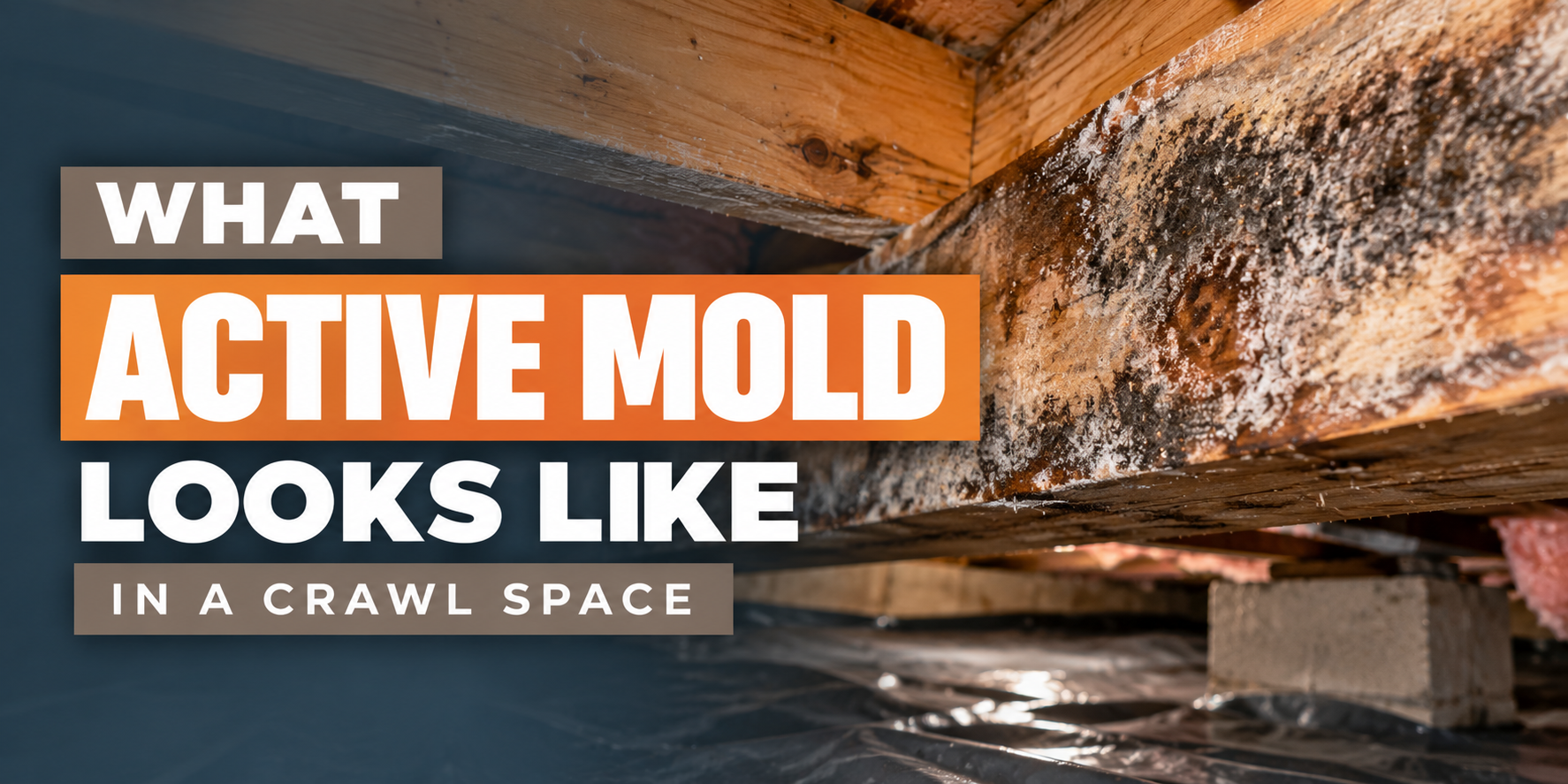
What we found down there was a crawl space that had been dealing with serious moisture problems for a long time. Standing water. A waterline on the wall. Ductwork sweating so much it looked like it was raining underground.
If any of that sounds familiar, keep reading. This is more common in Central Illinois homes than most people realize.
The Discovery: What We Found in This Crawl Space
The first thing you notice when you drop into a crawl space like this is the waterline on the wall.
That line tells you everything. It shows you exactly how high the water has gotten and how long this has been going on. This wasn't a recent problem. This crawl space had been dealing with moisture for years.
On the floor there was standing water. Not a puddle from last week's rain—water that had found its way in through multiple sources and had nowhere to go.
But the thing that really told the story was the ductwork.
Every single duct in that crawl space was sweating. Moisture dripping off the outside of the pipes, collecting on the floor, adding to the problem that was already there. The condensate line was doing the same thing—moisture building up on the outside and dripping straight down.
Most homeowners never see this. They smell something musty upstairs or notice their floors feeling a little soft, but they have no idea this is what's happening underneath them.
What Sweating Ductwork Actually Means
Here's what's happening and why it matters.
When your air conditioning runs, it creates cold ductwork. If the humidity level in your crawl space is high enough, the warm humid air surrounding those cold ducts causes moisture to condense on the outside surface. Same thing that happens to a cold drink on a hot summer day.
That condensation drips off your ductwork, off your pipes, off anything cold enough to cause it. And it collects on your crawl space floor.
We call it raining inside the crawl space. It sounds strange but it's completely real, and it happens in a lot of Central Illinois homes because of our humidity levels in summer.
Here's the part that concerns us most: this goes unnoticed for years. Nobody's going down there to check. The water just keeps collecting, the wood keeps absorbing moisture, and the damage quietly builds up over time.
What does that damage look like?
Your floor framing starts to weaken. Insulation gets saturated and stops working. Mold finds the environment it needs to grow. And because your crawl space and your living space share air, that moisture and everything growing in it eventually makes its way upstairs.
A musty smell that you can't track down. Floors that feel softer than they used to. Higher humidity throughout the house. These aren't random problems. They're symptoms of what's happening underneath you.
The Full Solution: What This Job Required
This crawl space needed more than one fix. That's the honest truth about a moisture problem that's been building for years—by the time you see the symptoms, there's usually more than one thing driving it.
Here's what we put together for this job and why each piece mattered.
Drainage system and downspouts. Water was finding its way toward this house from outside. We redirected it away from the foundation so it stops being a source of the problem.
Sump pump. For the water that does get in, you need somewhere for it to go. The sump pump handles that automatically.
Dimple mat. This goes down before the vapor barrier and protects against ground moisture pushing up from below. It gives water a path to the sump pump instead of just sitting there.
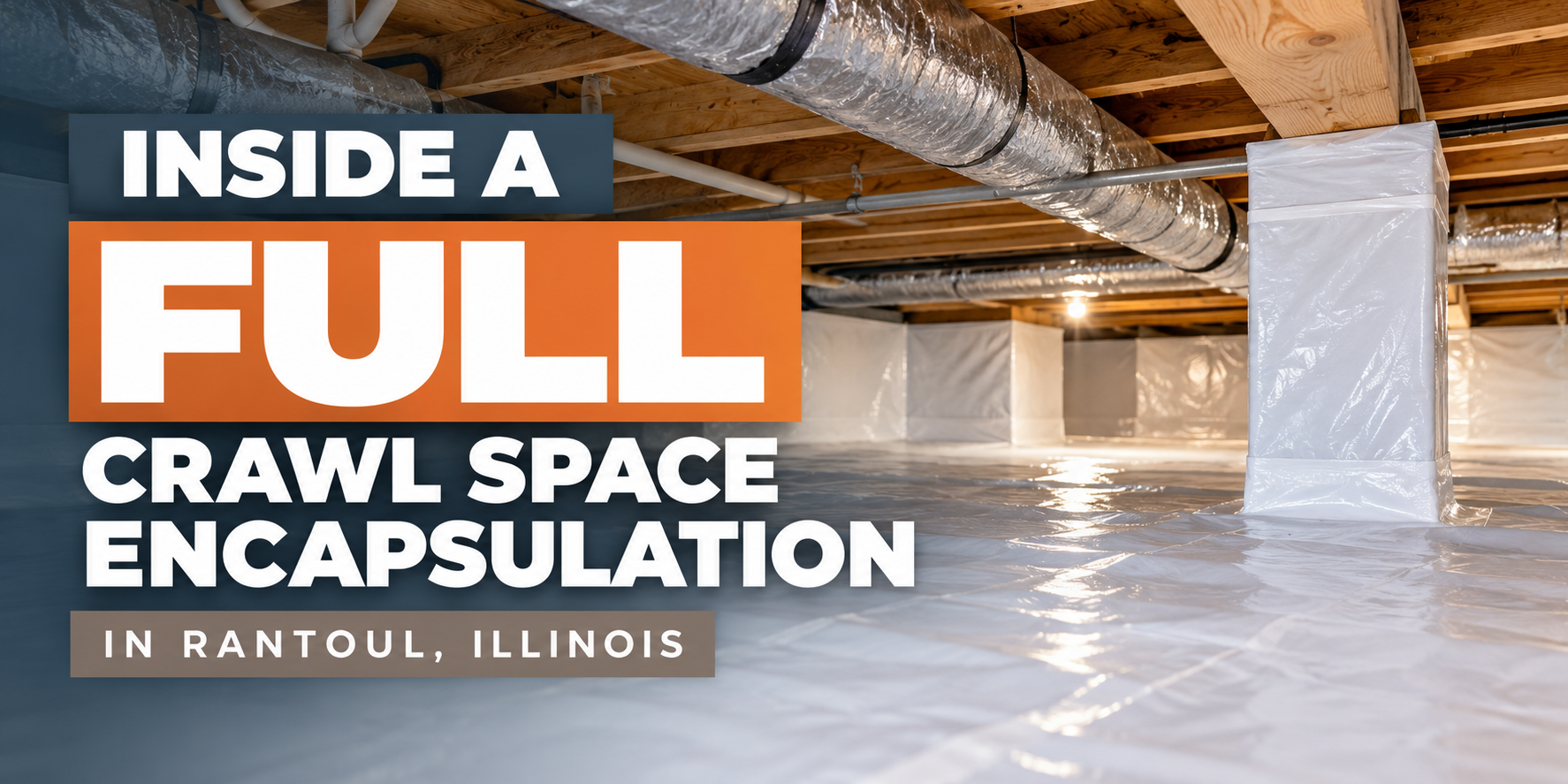
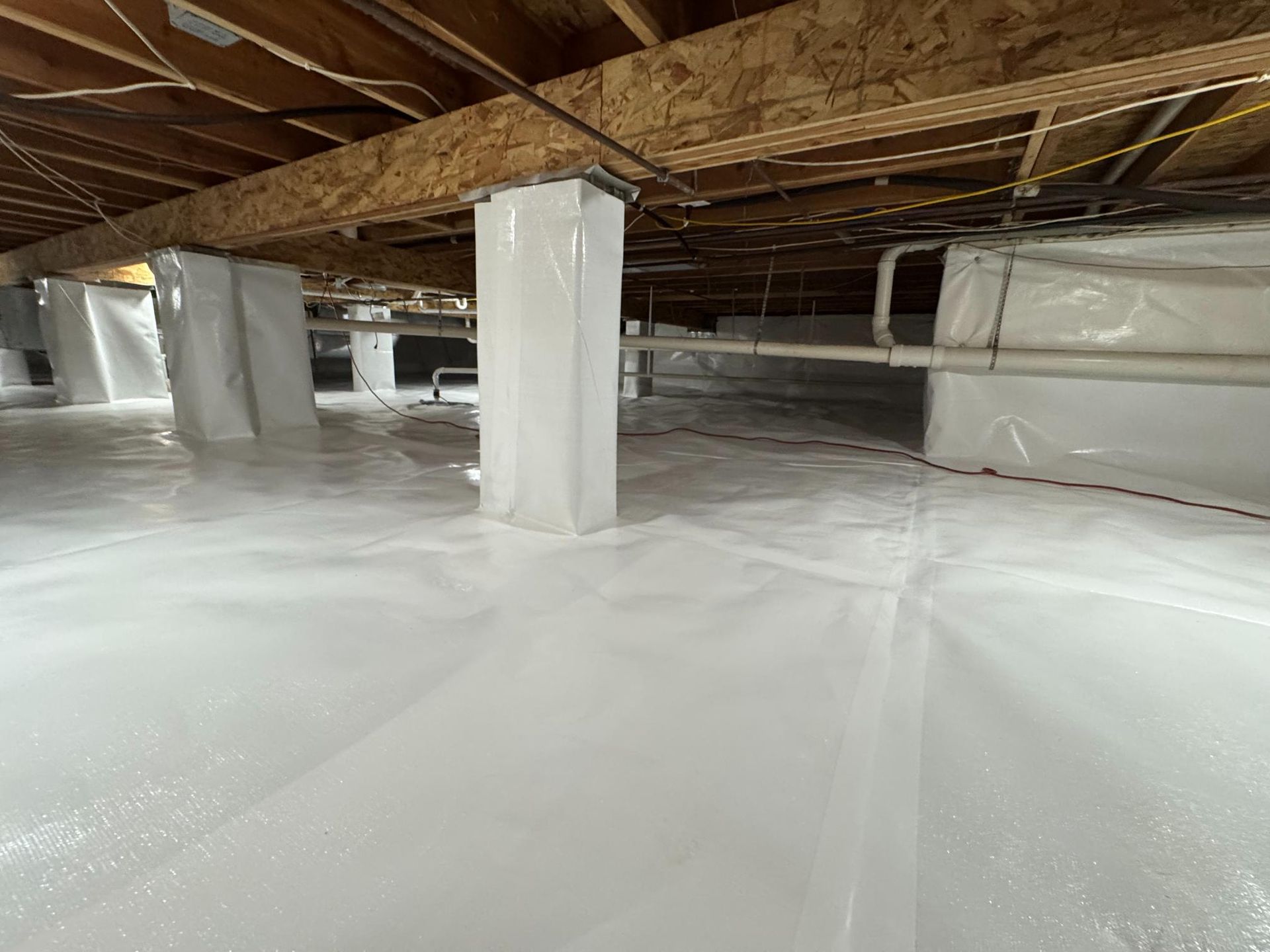
Full encapsulation. The vapor barrier seals the crawl space floor and walls, cutting off the ground as a moisture source entirely.
Dehumidifier. This is the piece that solves the sweating ductwork problem. By controlling the humidity level in the crawl space, you eliminate the conditions that cause condensation in the first place.
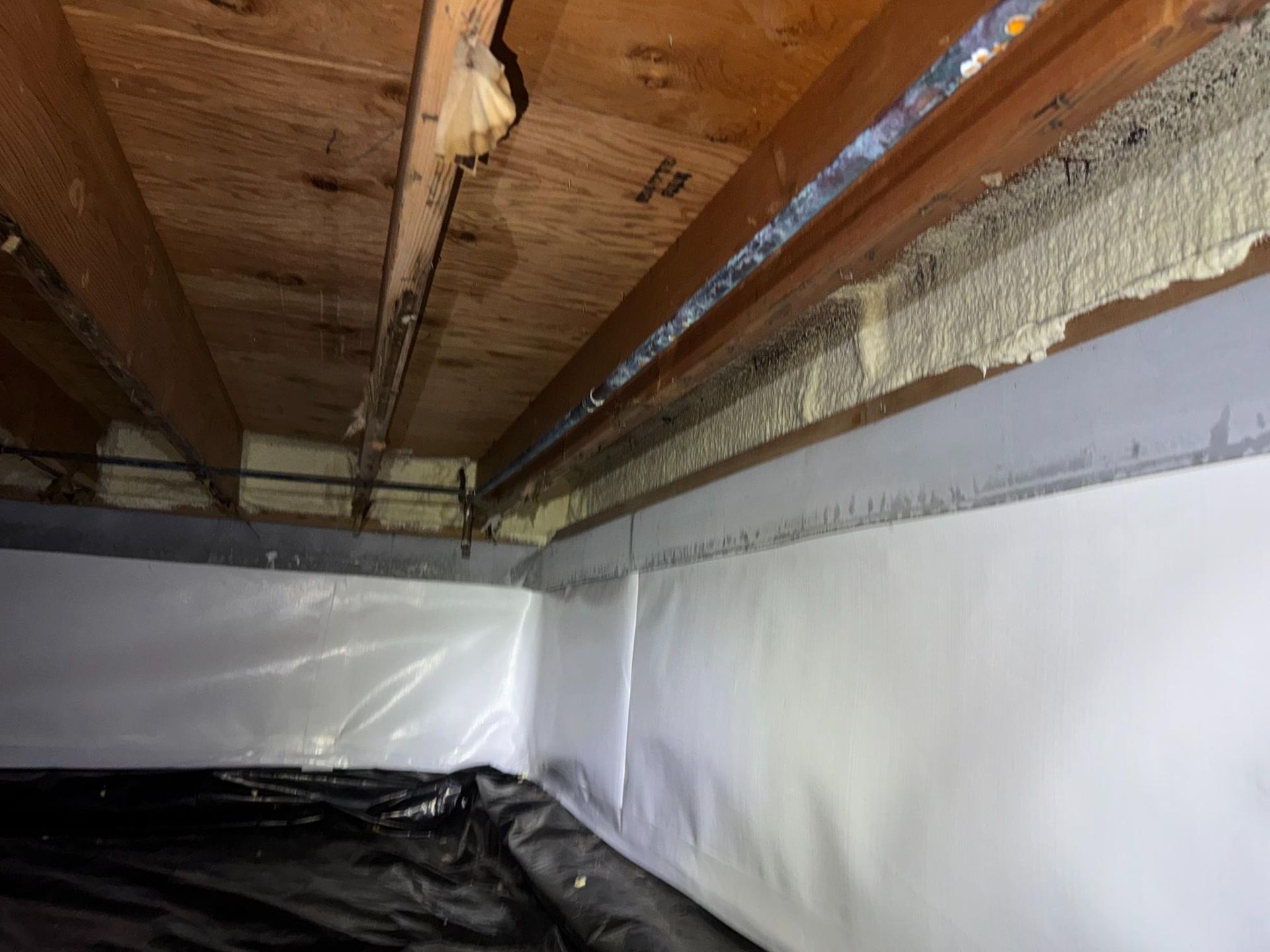
Spray foam on the rim joists. The rim joist is where your foundation meets your floor framing. It's one of the biggest entry points for outside air and moisture. Sealing it properly is a critical part of making everything else work.
Every one of these elements works together. Remove one and the others can't do their job properly.
What a Transformed Crawl Space Actually Does For Your Home
When this job is finished, the difference isn't just visible. It's felt throughout the whole house.
The air quality upstairs improves because the source of the moisture and everything growing in it is gone. That musty smell that homeowners have learned to live with? It goes away.
The floor framing is protected. Dry wood lasts generations. Wood that stays wet rots, weakens, and eventually becomes a structural problem that costs a lot more to fix than a crawl space encapsulation ever would.
The space itself becomes usable. Clean, dry, lit throughout. This homeowner will be able to store things down there. When a storm rolls through Central Illinois, his family can shelter in that space comfortably.
And every future service call gets easier. When your HVAC tech, plumber, or home inspector needs to get under the house, they'll actually be able to see what they're doing.
This is what we mean when we talk about solving the root cause instead of treating symptoms. One proper solution that protects your home for years.
What to Watch For in Your Own Crawl Space
You don't have to wait until the problem is obvious to do something about it.
Here are some signs that your crawl space might be dealing with the same kind of moisture issues we found in Danville.
A musty smell upstairs that you can't track down. If it gets worse in summer when the humidity is high, your crawl space is likely the source.
Floors that feel softer or springier than they used to. That's your floor framing absorbing moisture over time.
Higher than normal humidity throughout your house. If your home just feels damp and stuffy no matter what your thermostat says, look underneath first.
Visible waterlines on your crawl space walls. If you're brave enough to peek in there, a waterline tells you exactly how long water has been getting in.
Condensation on windows or pipes inside the house. Often a sign that humidity levels are out of control somewhere in the system.
Central Illinois summers are humid. That humidity has to go somewhere. For a lot of homes in this area, it goes straight into the crawl space and starts causing problems that take years to fully show up.
Book A Free Inspection Now
Your crawl space problems aren't going to fix themselves. But they are fixable. Let's get it done — the right way, permanently.
Or call us directly (217) 863-9559
Ready to Find Out What's Going On Under Your Home?
If anything in this article sounds familiar - musty smells, soft floors, high humidity, or you just haven't thought about your crawl space in a while - we'd love to take a look.
Chris or I will come out personally, do a thorough inspection, and show you exactly what we find. No pressure, no surprises. Just honest answers about what's happening under your home and what it would take to fix it.
Reach out anytime. We're proud to serve Mahomet, Danville, and communities across Central Illinois.