One Small Clog Almost Complicated This Crawl Space Job
When Day Two Changes Everything
Day two on a crawl space job is when you really find out what kind of crew you're working with.
Day one is exciting. You're getting started, laying out the plan, getting eyes on everything. Day two is where the real work happens. And sometimes, day two throws you something you weren't expecting.
That's exactly what happened on this job here in Mahomet.
We showed up ready to keep moving on a full encapsulation and found water dripping where it absolutely should not have been. Right onto our fresh dimple mat. Right in the middle of a system we'd just installed to manage moisture.
That moment right there—what a crew does next—tells you everything about their standards.
What We Found and Why It Mattered
The furnace condensation line had a small clog.
If you're not familiar, your furnace produces condensation as it runs. That moisture has to go somewhere, and it drains out through a condensate line. When that line gets clogged, the water backs up and starts dripping—in this case, directly into the crawl space.
Small clog. But not a small problem.
Here's why it mattered: we had just installed a brand new dimple mat as part of this encapsulation system. That mat is designed to manage moisture and direct water toward the drainage system. Having a furnace dripping onto it before we'd even finished the job wasn't just inconvenient—it was a direct threat to the integrity of everything we were building.
Left alone, that drip would have kept going. Long after we were gone. Long after the homeowner thought everything was handled. Quietly working against the very system they'd just paid to have installed.
Some crews would've kept working and said nothing. That's not something we're willing to do.
What We Did About It
We stopped.
That's the first thing. We didn't keep working and hope nobody noticed. We didn't tell ourselves it wasn't our problem because it was a plumbing issue and we're a crawl space crew. We stopped, looked at what was happening, and documented it.
Then we called the homeowner.
We showed him exactly what we found and exactly why it was a problem. No technical jargon, no confusing explanations—just a clear look at what was happening under his house and why it needed to be addressed before we could move forward.
He got a plumber out the same day. The plumber confirmed a small clog, cleared it, and we were back to work.
The whole thing added time to the job. But here's the alternative: finish the job, say nothing, and leave a homeowner with a brand new encapsulation system being slowly undermined by a dripping condensate line. That's not something we're willing to put our name on.
Why Communication Is Non-Negotiable
This is something we feel strongly about at My Guys.
When you hire us, you're not just hiring a crew to complete a task and disappear. You're hiring people who are going to pay attention to your home and tell you what they find—even when it's outside the scope of what they were originally called for.
That's what real trust looks like.
A lot of contractors struggle with this. Not because they're bad people, but because stopping to communicate takes time. It slows things down. It opens up conversations that feel complicated. It's easier to just keep moving and hope the homeowner never notices.
But here's the thing: they usually do notice. Maybe not today. Maybe not for six months. But eventually that small ignored problem becomes a big expensive one. And by then, the crew that ignored it is long gone.
We live here in Mahomet. We're not going anywhere. When something comes up on your job, you're going to hear about it from us. Every single time.
What Your Crawl Space Is Connected To
Most people think of their crawl space as an isolated space under the house. Sealed off. Separate from everything else.
It's not.
Your HVAC system runs through it. Ductwork, condensate lines, sometimes the air handler itself. Your plumbing runs through it. Supply lines, drain lines, shutoff valves. Your electrical runs through it. Junction boxes, wiring, all of it.
Which means when something goes wrong with any of those systems, the crawl space is usually where it shows up first.
That's why experience matters. Not just experience with vapor barriers and dehumidifiers—but real working knowledge of the systems that share that space. We've spent years in crawl spaces across Central Illinois. We know what a properly routed condensate line looks like. We know what a plumbing leak looks like in its early stages. We know what electrical concerns to flag.
When we're under your house, we're not just looking at the crawl space. We're looking at everything connected to it. Because that's the only way to make sure the work we do actually holds up.
The Finished Product
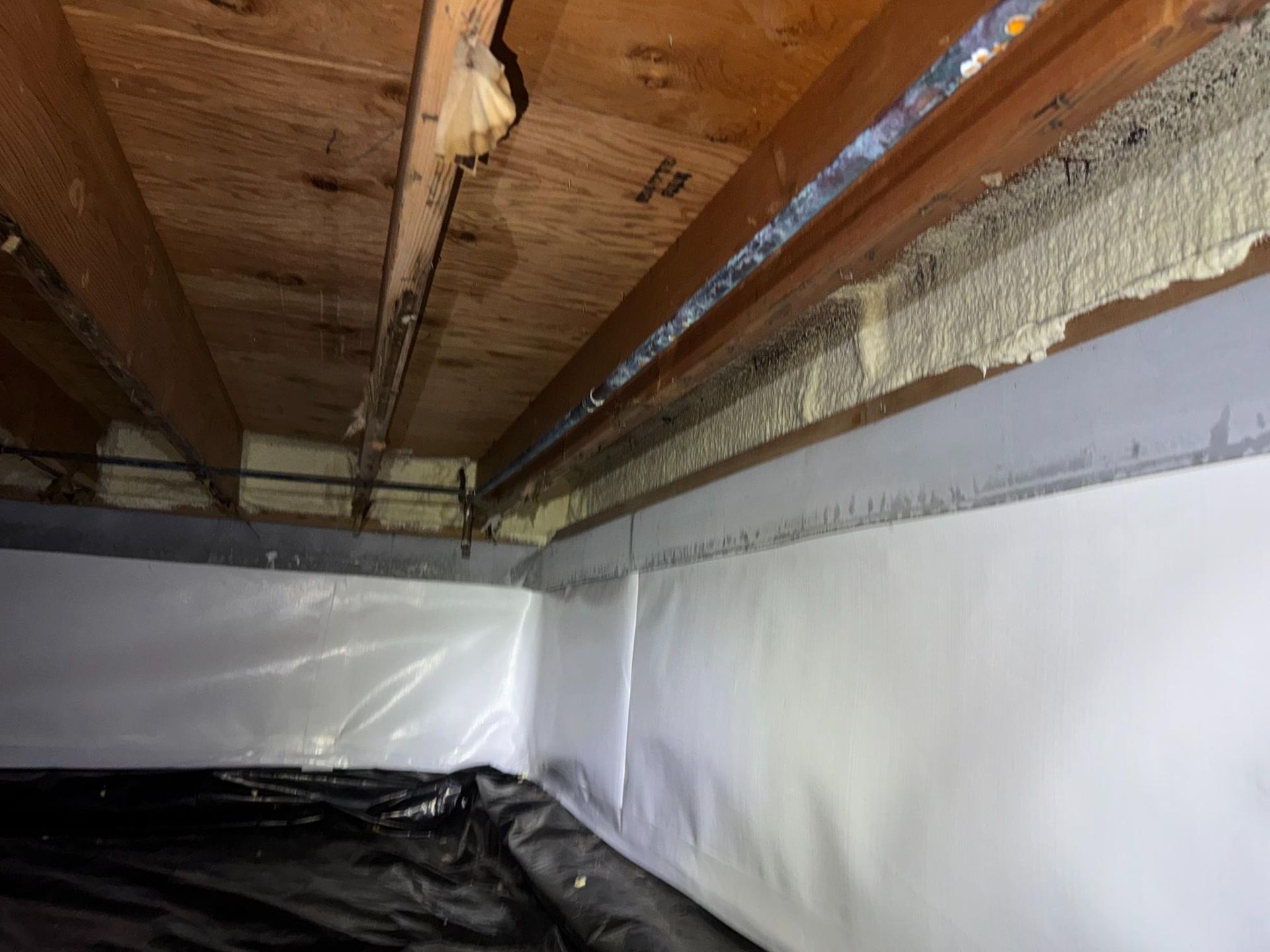
After the condensate line was cleared and we got back to work, here's what this Mahomet crawl space looked like when we were done.
Spray foam sealed in every joist pocket. That stops outside air from infiltrating the space and keeps the thermal envelope tight.
Full perimeter drain tile installed. Any water that finds its way in gets captured and directed where it needs to go.
Complete encapsulation from floor to walls. Clean, bright, sealed properly.
Dehumidifier hung and running. Keeping moisture levels where they need to be year round.
Sump pit and discharge installed and ready. The last line of defense against standing water.
That's a complete system. Every component working together to protect the home from the bottom up. Not just one piece of the puzzle—all of it, done right, done in sequence, and done with attention to every detail including the ones that weren't part of the original plan.
This is what a finished crawl space encapsulation should look like. Clean, functional, and built to last.
What Homeowners Should Expect From Any Crawl Space Crew
Before you hire anyone to work on your crawl space, here are some things worth knowing.
Ask how they handle unexpected discoveries. Do they stop and communicate, or do they keep working and hope you don't notice? The answer tells you a lot.
Pay attention to how they explain things. A good crew can tell you what's wrong in plain language without making you feel confused or pressured. If they're throwing around technical terms without explaining them, that's worth noting.
Watch how they treat day two. Any crew can show up strong on day one. The real test is what happens when something unexpected comes up mid-job.
Ask to see the finished space. Good work looks good. If they're hesitant to walk you through what they did and why, that's a red flag.
And finally: make sure you can actually reach them. Chris and I answer our phones personally. If something comes up after the job is done, you're not going to get a call center. You're going to get us.
Book A Free Inspection Now
Your crawl space problems aren't going to fix themselves. But they are fixable. Let's get it done — the right way, permanently.
Or call us directly (217) 863-9559
Ready to See What's Really Going On Under Your Home?
If you've got moisture issues, musty smells, or you just want to know what's actually happening under your house, we'd love to come take a look.
We'll do a thorough inspection, show you exactly what we find, and walk you through what we'd recommend. No pressure, no confusing proposals—just honest answers from Chris or me directly.
We serve Mahomet and communities throughout Central Illinois.
Reach out anytime. We're always happy to talk.