Starting a Full Crawl Space Encapsulation in Mahomet
When a homeowner finally makes the call, something shifts.
We come out and do a thorough inspection. We get under the home and look at everything — and we show you what we're seeing in real time so there are no surprises when we sit back down with you. You'll know exactly what's down there. You'll know exactly what it takes to fix it. And you'll have a clear picture of what your home looks like after the work is done.
No pressure. No scare tactics. Just an honest look at what's happening and a straightforward plan to address it.
Most homeowners tell us the same thing after that first visit.
They wish they hadn't waited as long as they did.
Here's What a Full Crawl Space Job Actually Looks Like
Ryan here with My Guys, and we're kicking off a pretty decent sized crawl space job today right here in Mahomet.
Before we get into it, take a look at what we're starting with. The old plastic vapor barrier is coming out, and underneath it is rock. Clean, solid, drains naturally. As far as starting points go, this is actually a good one.
But a clean starting point doesn't mean a simple job. This crawl space needs a full system. Drain tile. Spray foam on the joist pockets. Full encapsulation. A sump pump with proper discharge. And all the vents sealed up.
Five components. One complete solution. Here's what each one does and why this home needs all of them.
What We Found When We Got There
The first thing we do on every job is pull out whatever's already down there. In this case, that's the old white plastic vapor barrier.
A lot of homeowners don't realize that old vapor barrier has to come out completely. You can't just layer new material on top of deteriorating plastic. It traps moisture underneath, defeats the purpose of the new encapsulation, and creates exactly the kind of environment you're trying to get rid of.
Once it's out, we can see exactly what we're working with. Here, we've got rock underneath. That's genuinely good news. Rock doesn't hold moisture the way bare dirt does. It gives us a clean, stable surface to work on and lets the drain tile system do its job properly.
Not every crawl space starts this clean. We've been in plenty that had years of debris, standing water, and deteriorating materials piled up before we could even begin installation. This one is in solid shape to start, which means we can focus on doing the work right instead of spending half the job on cleanup.
The Full System: What We're Installing and Why
Here's what's going into this crawl space and why each piece matters.
Drain tile. This is where we start because water management comes first. Drain tile is a perforated pipe that runs along the perimeter of the crawl space and channels water to the sump pump before it has a chance to pool or cause damage. If water is getting in, you deal with that first. Everything else depends on it.
Spray foam on the joist pockets. The joist pockets are the spots where your floor joists meet the foundation wall. They're one of the most common places outside air sneaks into a crawl space. We seal every one of them with spray foam to stop that air movement at the source.
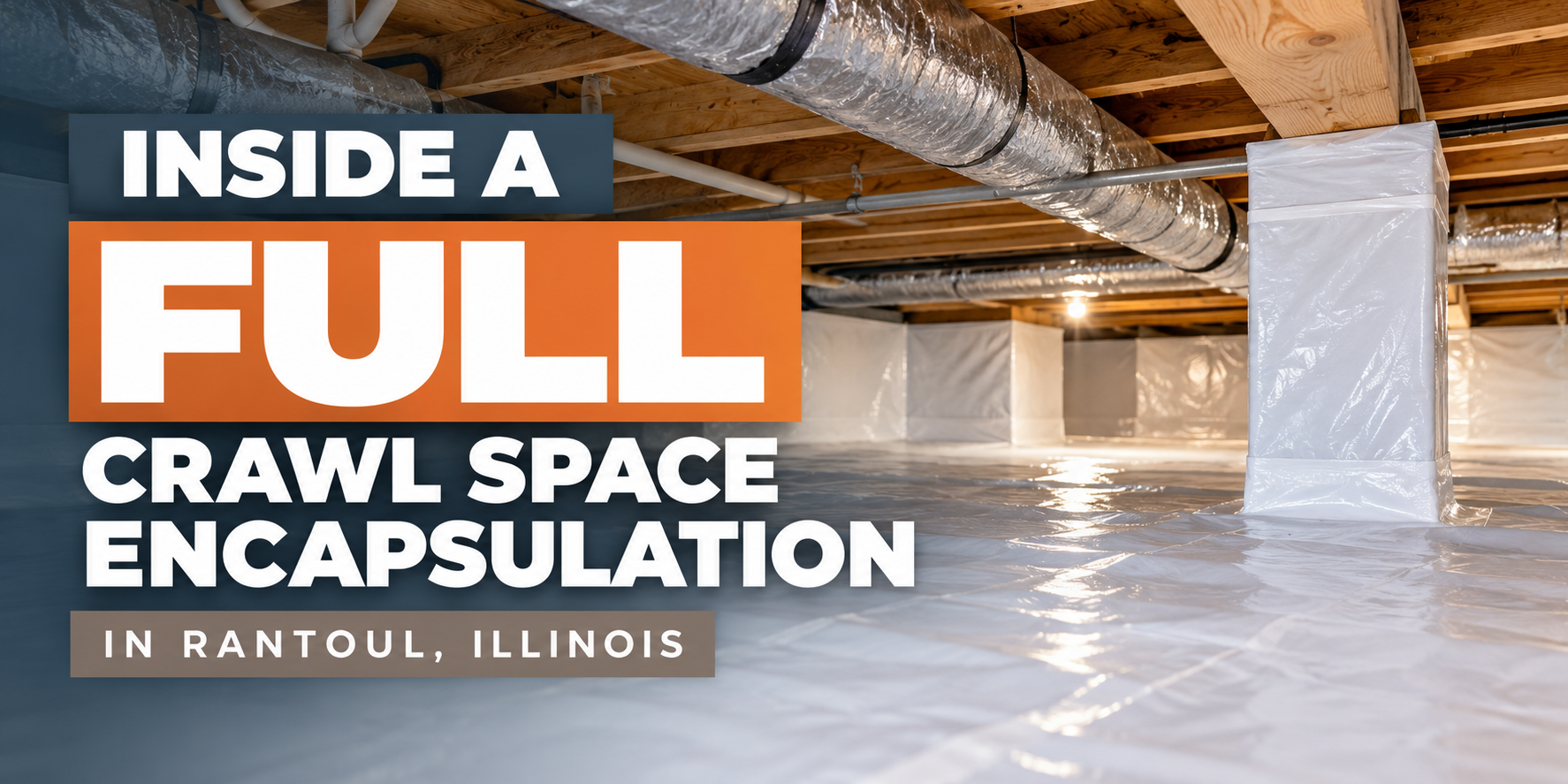
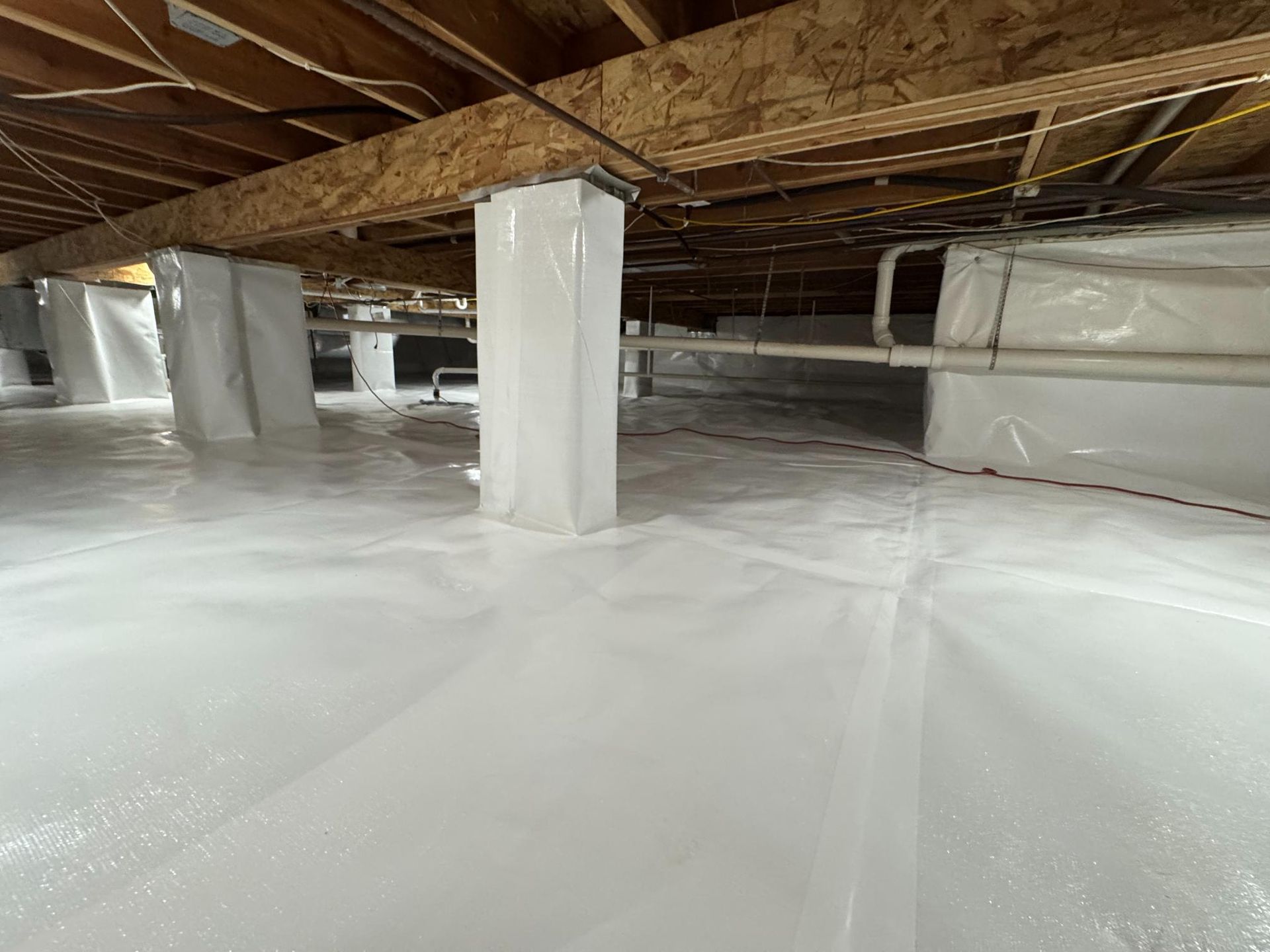
Full encapsulation. This is the heavy duty liner that goes on the floor and up the walls. It creates a sealed, controlled environment that keeps ground moisture out and separates your crawl space from the elements underneath it.
Sump pump with discharge. Even with drain tile and encapsulation, water can still find its way in during heavy rain or flooding. The sump pump collects it and pumps it safely away from the house.
Sealed vents. This one surprises people. Open crawl space vents actually pull humid outside air in during summer months. Sealing them is a critical part of keeping humidity under control year round.
Five components. Each one doing a specific job. All of them working together.
Why One Fix Is Never Enough
We get calls all the time from homeowners who had one thing done and are still dealing with the same problems six months later.
Someone came out and sprayed for mold. Smell came back. Someone else installed a vapor barrier but left the vents open. Humidity never dropped. Another crew put in a sump pump but never addressed how water was getting in to begin with. Pump runs constantly and the crawl space is still damp.
Each of those is a real fix for a real problem. But none of them solve the whole picture.
Moisture in a crawl space rarely has one source. You've got ground moisture coming up through the soil. Outside air coming in through vents and gaps. Water finding its way in through the foundation during heavy rain. Sometimes all three at once.
When you only fix one piece, the others keep working against you. That's why we look at the whole system before we recommend anything. Because a partial solution to a moisture problem isn't really a solution at all. It's just a slower version of the same problem.
What to Expect When the Job Is Done Right
When we finish this job, the crawl space is going to look completely different from what you saw in that video.
Clean white encapsulation on the floor and walls. Spray foam sealing every joist pocket. Drain tile running the perimeter. Sump pump installed and ready. Vents sealed up tight. Lights throughout so you can actually see what you're looking at.
That last part matters more than people realize. A properly finished crawl space should be bright enough to walk through. Not just a sealed dark hole that nobody wants to enter. When your HVAC tech needs to check ductwork or your plumber needs to access a pipe, they should be able to see what they're doing clearly.
We also document everything. Photos and video of the finished product so you can see exactly what was done and how. No "trust us, it's good under there." We show you.
When we say we're done, the space should look better than anything you've seen from another crawl space company. Clean, functional, and built to last.
Book A Free Inspection Now
Your crawl space problems aren't going to fix themselves. But they are fixable. Let's get it done — the right way, permanently.
Or call us directly (217) 863-9559
Ready to See What's Really Going On Under Your Home?
If you're dealing with moisture, musty smells, soft floors, or you just want to know what's actually happening under your house, reach out.
Ryan, Chris, or Jeff will come out and do a full inspection. We'll show you exactly what we find, walk you through what we'd recommend, and answer any questions you have.
No pressure. No big number on a little piece of paper without explanation. Just honest answers from people who live and work right here in Central Illinois.