Why We're Doing Crawl Space Work on a Brand New Home in Tuscola
When a homeowner finally makes the call, something shifts.
We come out and do a thorough inspection. We get under the home and look at everything — and we show you what we're seeing in real time so there are no surprises when we sit back down with you. You'll know exactly what's down there. You'll know exactly what it takes to fix it. And you'll have a clear picture of what your home looks like after the work is done.
No pressure. No scare tactics. Just an honest look at what's happening and a straightforward plan to address it.
Most homeowners tell us the same thing after that first visit.
They wish they hadn't waited as long as they did.
New Home Doesn't Mean Protected Home
When most people think about crawl space problems, they picture an old house. Decades of moisture, aging wood, deteriorating vapor barrier. Not a newer construction home that's barely been lived in.
But that's exactly where we are today. Tuscola, Illinois. Brand new home. And we're putting in a full crawl space protection system before this homeowner ever has a problem.
Ryan and the crew—Jackson, Dylan, and Dennis—are already on site. Drain tile is trenched and buried. Sump pit is dug and the basin is in place. Walls and floor encapsulation are next.
The homeowner made a smart call. And once you understand what builders typically leave out, you'll see exactly why.
What Happens When Contractors What Builders Typically Leave Outthe Inspection
When a home gets built, the focus goes where buyers are looking. The kitchen. The bathrooms. The flooring and fixtures. That's what sells a house.
The crawl space? It's an afterthought.
Builders are working to a budget and building to code. And here's the thing about "built to code"—it means the home meets the minimum legal requirements. It doesn't mean the crawl space is set up to actually handle what Central Illinois throws at it year after year.
Most new construction crawl spaces get basic venting at best. Sometimes a thin layer of plastic on the ground. That's it. No drain tile to redirect ground water. No sump system to remove what collects. No proper encapsulation on the walls.
That might be fine in a drier climate. But in Central Illinois, we deal with heavy spring rains, serious ground moisture, and summer humidity that doesn't quit. A crawl space that's just "built to code" here isn't necessarily a crawl space that's protected.
That gap between "built" and "protected" is exactly what today's job is filling.
What We Found When We Got Inside
Here's how it usually goes.
A homeowner notices a musty smell. Or maybe the floor starts feeling a little soft in one spot. They ignore it for a while, assuming it's nothing. Then the smell gets worse. Then the floor gets softer. Then they call someone out and find out moisture has been sitting under their home for years.
By that point, it's not a simple fix.
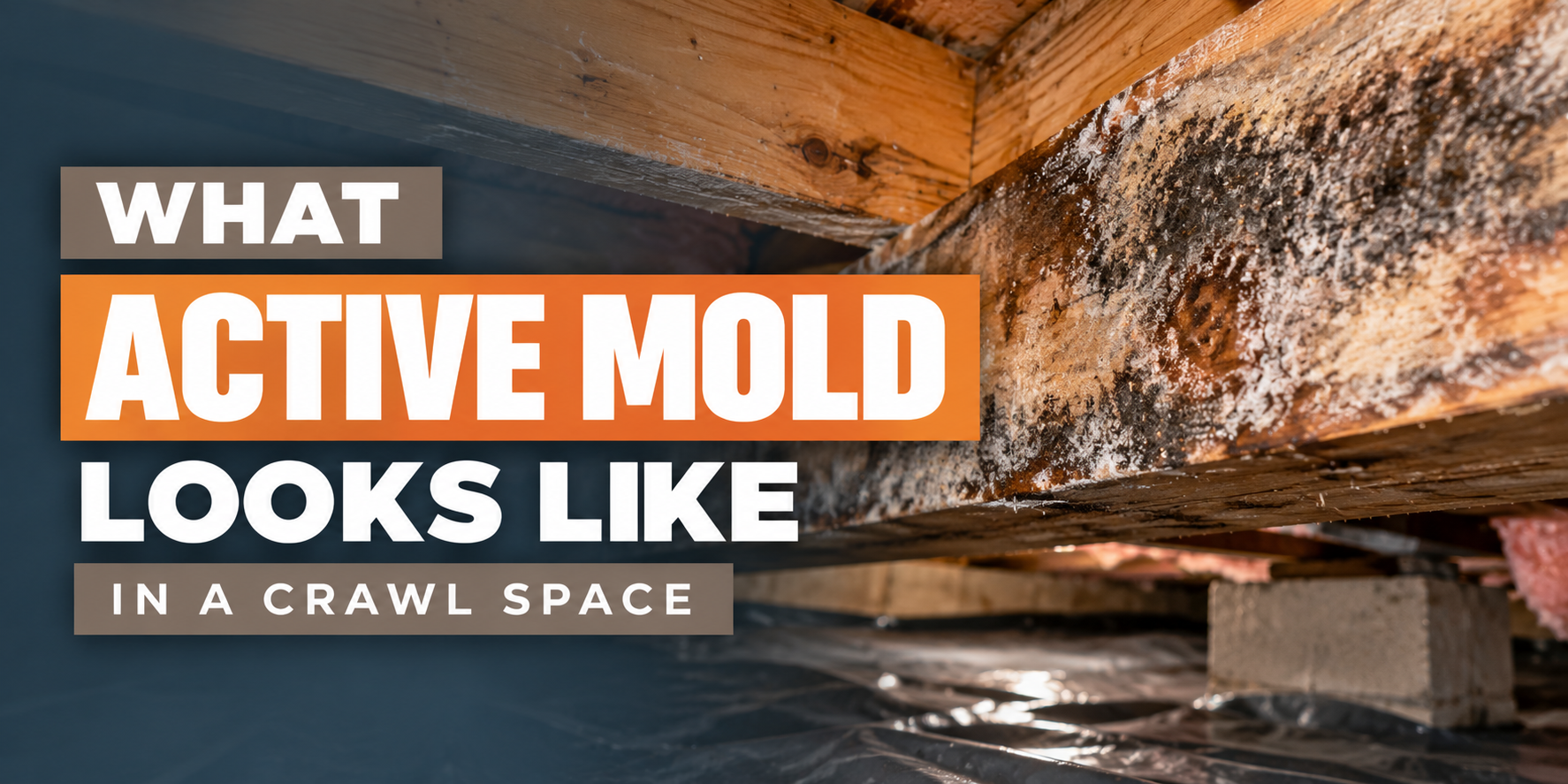
Unchecked moisture leads to humidity buildup. Humidity creates the perfect environment for mold. Mold attacks your wood. And once your floor framing system starts to deteriorate, you're looking at a much bigger project than a standard encapsulation.
We've seen it plenty of times here in Central Illinois. What could have been a straightforward preventative job turns into mold remediation, floor support work, and full encapsulation all at once.
The cost difference is significant. More importantly, the stress difference is significant.
Getting ahead of moisture problems isn't pessimistic. It's just smart homeownership.
What a Full Crawl Space Protection System Looks Like
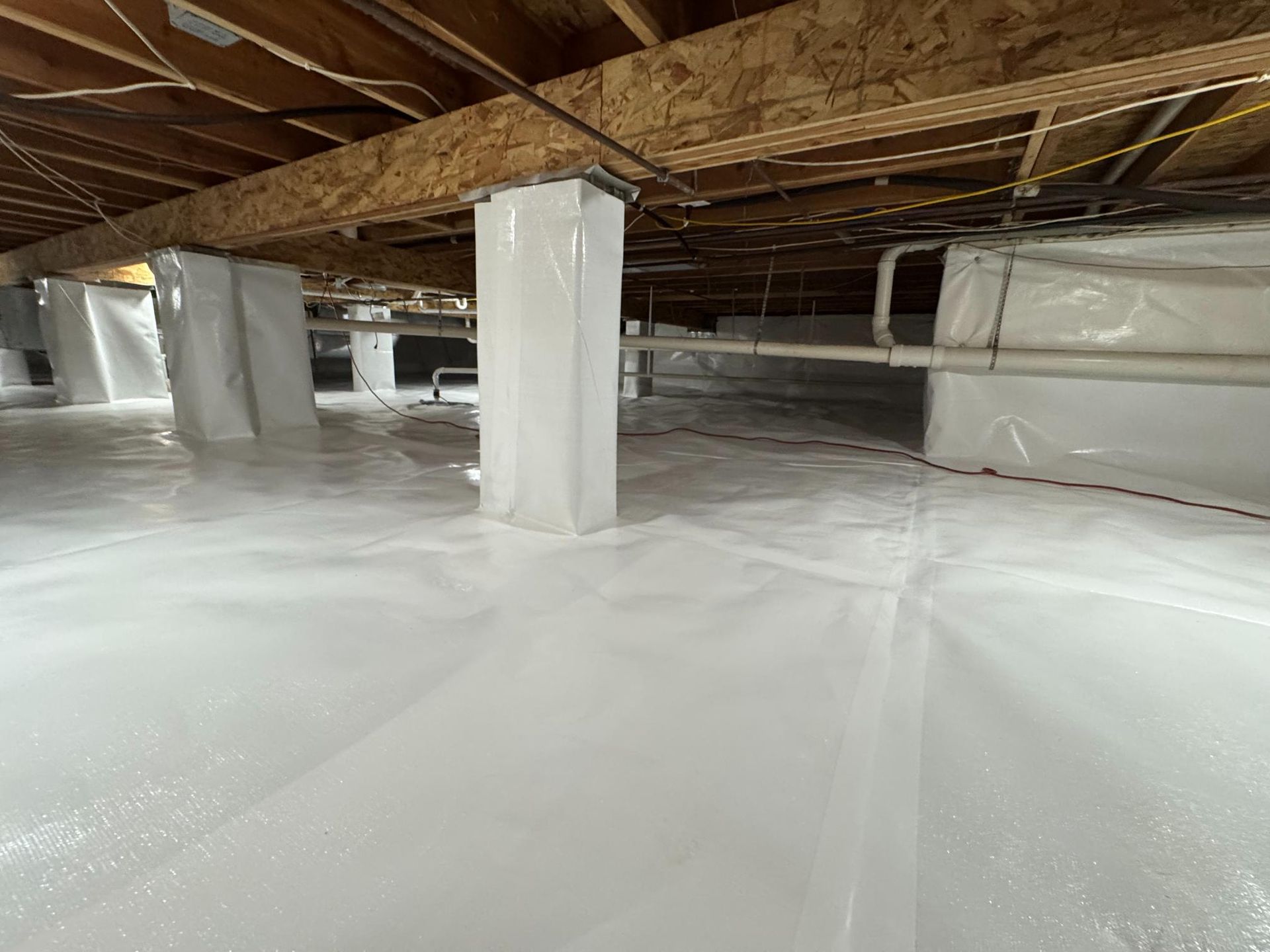
Today's job in Tuscola gives a great picture of what a complete crawl space protection system actually involves.
It starts with drain tile.
Drain tile is a perforated pipe that gets trenched and buried around the perimeter of your crawl space. Its job is to intercept ground water before it has a chance to collect under your home and redirect it away. On this job, the trench is already dug and the tile is buried. Step one done.
Next is the sump pit and pump.
Even with drain tile in place, some water will still find its way in. That's where the sump system comes in. We dig a pit, drop in a basin, and build out a pump that collects whatever water makes it through and discharges it safely away from the home. The basin is already in place on this job. Pump installation is next.
Then comes encapsulation.
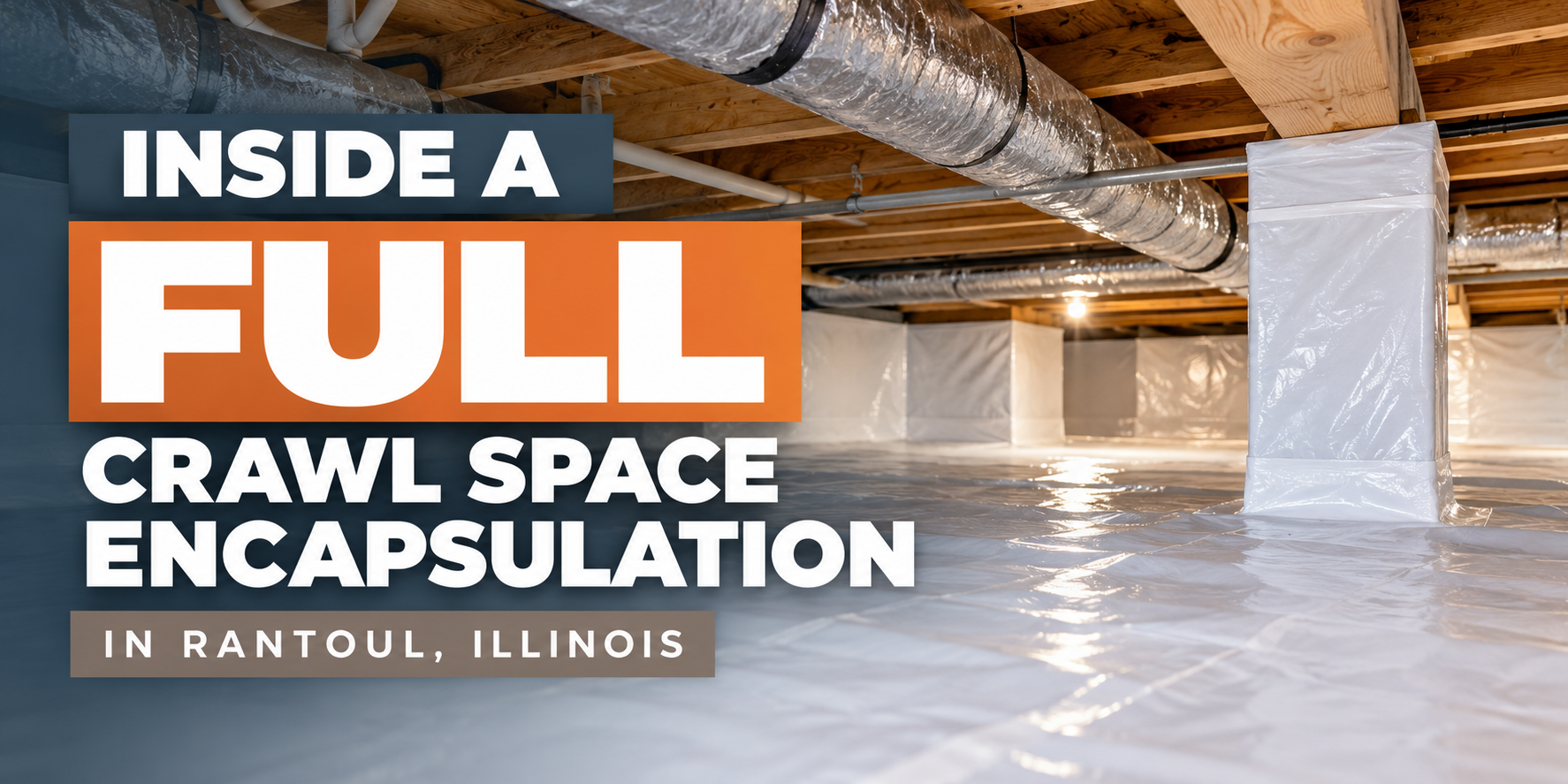
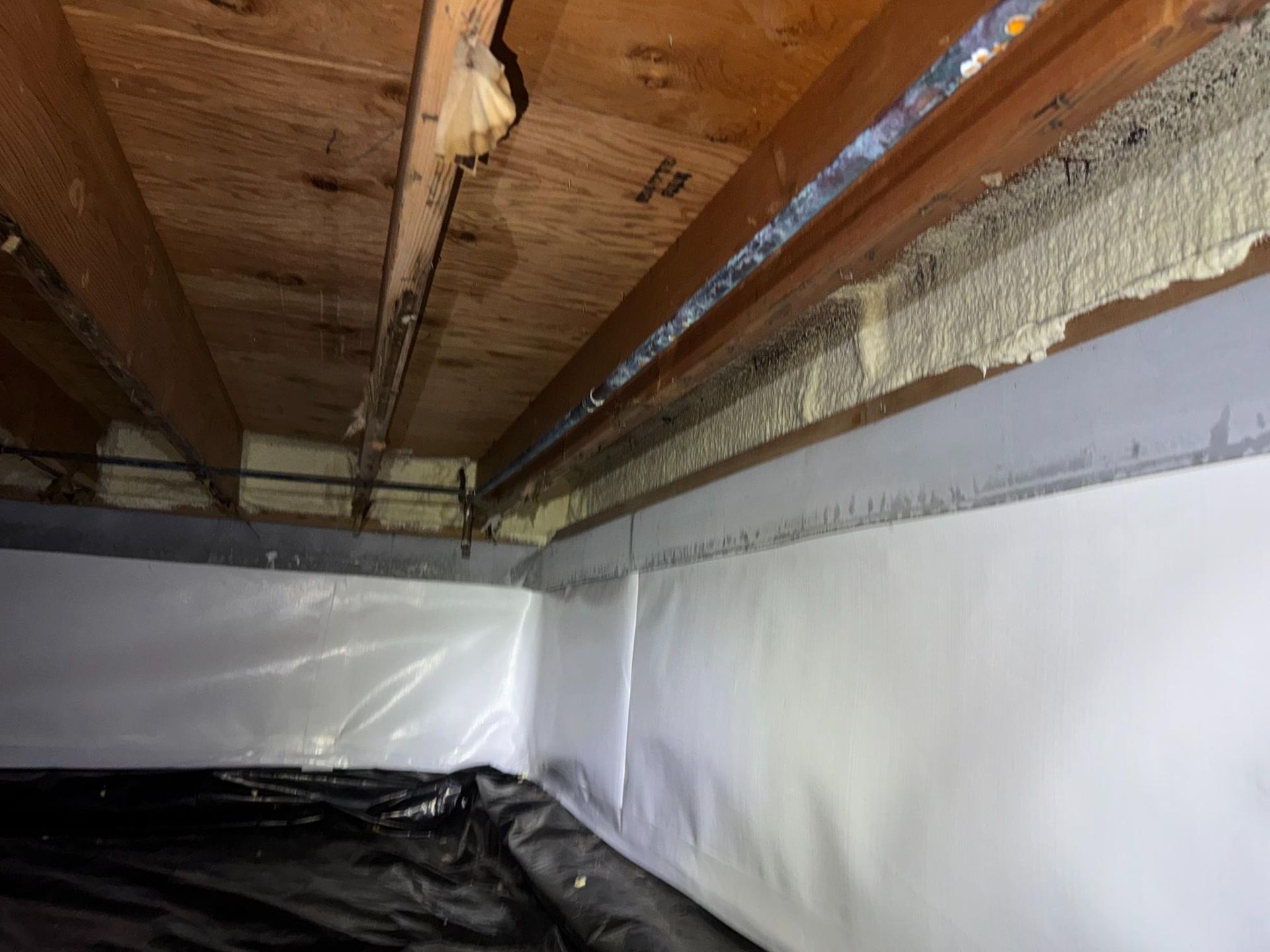
This is where we seal the walls and floor with a heavy duty vapor barrier. This is what stops moisture from evaporating up through the ground and into your crawl space air. Combined with the drain tile and sump system, encapsulation completes the barrier between your home and the ground beneath it.
These three elements work together as a system. Drain tile redirects. The sump collects and removes. Encapsulation seals.
One without the others leaves gaps. All three together give you a crawl space that's genuinely protected.
Why Newer Homes in Central Illinois Are Vulnerable
This isn't just a general crawl space issue. There's something specific about where we live that makes this conversation especially important.
Central Illinois soil holds a lot of moisture. Spring thaw sends ground water moving in every direction. Heavy rain events—and we get plenty of them—saturate the ground fast. Summer brings humidity levels that make an unprotected crawl space feel like a sauna.
That moisture has to go somewhere. And without a system designed to handle it, it goes under your home.
Newer construction doesn't change that equation. The ground doesn't care how old your house is. Illinois weather doesn't give newer homes a pass. If the crawl space isn't set up to manage moisture, it's vulnerable. Simple as that.
Local builders know how to build homes. But crawl space protection is a specialty. It requires understanding how water moves through this specific soil, in this specific climate, in this part of the state. That's local knowledge that doesn't come standard with a new construction build.
It's exactly the kind of thing we think about every day.
What Smart Homeowners Do Before There's a Problem
There are two kinds of crawl space calls we get.
The first is reactive. Something's wrong. There's a smell, a soft floor, visible moisture, or a home inspector flagged something during a sale. By the time we get there, the problem has usually been developing for a while.
The second is proactive. A homeowner wants to know what's under their home before anything goes wrong. They'd rather spend on prevention than spend on repair. That's the call we got in Tuscola.
Here's the honest truth: preventative crawl space work is almost always less expensive than remediation work. You're not paying to undo damage. You're just paying to protect what's already in good shape.
For newer home owners especially, it's worth getting an inspection just to understand what you're working with. Maybe your crawl space is fine. Maybe there are some gaps worth addressing. Either way, you'll know. And knowing beats guessing every single time.
Peace of mind is worth a lot. So is catching something early.
Book A Free Inspection Now
Your crawl space problems aren't going to fix themselves. But they are fixable. Let's get it done — the right way, permanently.
Or call us directly (217) 863-9559
Not Sure What's Under Your Home?
Whether your home is brand new or has been standing for decades, it's worth knowing what's happening underneath it.
We offer thorough crawl space inspections with full documentation. You'll see exactly what we find and get an honest recommendation on what, if anything, needs to be done.
There's no pressure and no obligation. Just a straight conversation with Jeff or Chris about what's going on under your home and what your options are.
If you're in Mahomet, Tuscola, or anywhere in Central Illinois, reach out anytime. We'd love the opportunity to help.