Why Your Crawl Space Might Be Wetter Than You Think - And How to Know for Sure

Jeff Robinson • September 28, 2026

When a homeowner finally makes the call, something shifts.


We come out and do a thorough inspection. We get under the home and look at everything — and we show you what we're seeing in real time so there are no surprises when we sit back down with you. You'll know exactly what's down there. You'll know exactly what it takes to fix it. And you'll have a clear picture of what your home looks like after the work is done.


No pressure. No scare tactics. Just an honest look at what's happening and a straightforward plan to address it.


Most homeowners tell us the same thing after that first visit.


They wish they hadn't waited as long as they did.

What We Found Under One Central Illinois Home

I want to tell you about something I found recently, because it's more common than you'd think.


Every home with a crawl space has a condensate line. That's just a fancy name for the drain that carries water away from your air conditioner and furnace. Both of those units make water when they run. That water has to go somewhere.


In a home done right, that water drains into a pump. The pump then pushes it out of the crawl space completely — either outside or into a proper drain line.


In this home, that's not what was happening.


The contractor who worked on this system before us just let the water drain straight onto a pile of nails sitting on the dirt floor. Then he cut the plastic pipe so it looked like it was draining into the ground.


It wasn't. It was just sitting there, right under the house, every single time the AC or furnace ran.

What a Condensate Line Is Supposed to Do

Let's slow down for a second, because this matters even if you never end up needing our help.


Your AC and furnace both create condensation — that's just water forming from temperature changes, the same way a cold glass sweats on a summer day. That water has to go somewhere, or it builds up.


The correct setup looks like this:


  • Water drains out of the unit
  • It flows into a small pump
  • The pump pushes that water out of the crawl space entirely
  • That's it. It's not complicated. But it only works if it's actually connected the way it's supposed to be.


When it's not — when the water just drains onto the floor, like it was in this home — you've got a constant, ongoing water source sitting under your house. Every time the AC kicks on, more water shows up. Day after day. Month after month.


That kind of steady moisture is exactly what leads to the things nobody wants under their home: mold, wood rot, bad air, and a crawl space that just never seems to dry out no matter what else gets done to it.

Why This Kind of Thing Happens

Here's the part that bothers me the most.


That pipe wasn't just left disconnected by accident. It was cut. Someone made it look like it was draining into the ground on purpose.


I don't say that to be harsh. I say it because it's important for you to understand why this kind of thing survives for years without anyone catching it.


A crawl space is the one part of a home almost nobody looks at. You don't walk down there every week. You don't check on it the way you'd check a leaky faucet or a running toilet. Most homeowners never see their crawl space at all after the house is built.


That means whatever gets done down there — right or wrong — usually goes unnoticed. Nobody's checking. Nobody's watching. If a contractor wants to take a shortcut, that's exactly where it's easiest to get away with it.


It's not that homeowners are careless. It's that they trusted the people doing the work, the same way most of us do. You hire a professional because you assume they'll do the job right. Most of the time, that trust is reasonable. But it only takes one shortcut, hidden in a place nobody checks, to cause real problems down the road.

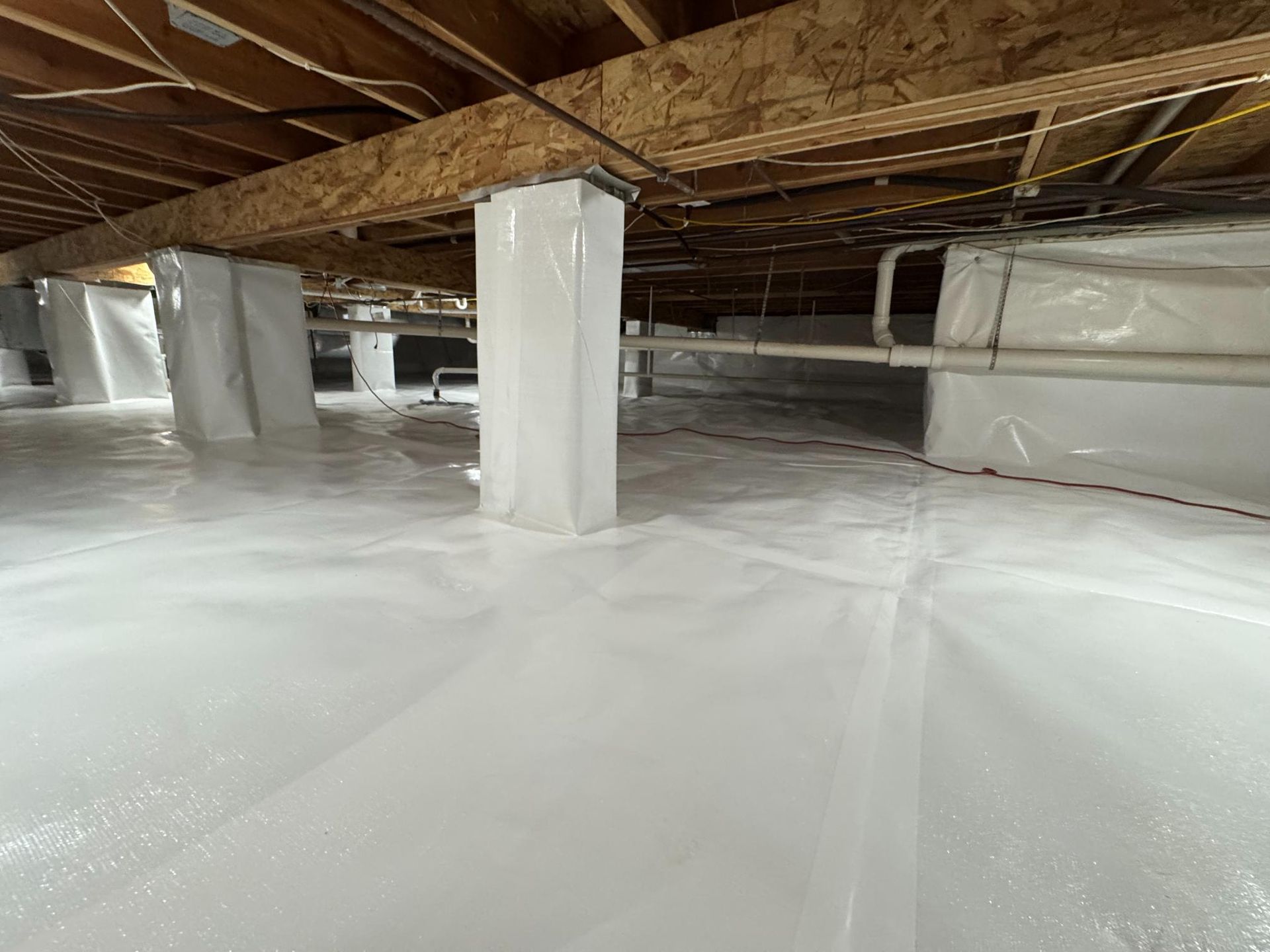
A crawl space with white plastic vapor barrier covering the ground and wrapping around the support pillars and walls.

What It Looks Like When Someone Actually Checks

Here's the good news. This isn't a hard problem to catch — it just requires someone to actually look.


When we go under a home, we're not guessing. We're not telling you "trust us, it's fine." We show you exactly what we find, good or bad. If a condensate line is draining onto your crawl space floor instead of out through a pump, you'll know. If everything's set up correctly, you'll know that too.


That's the whole difference. You shouldn't have to wonder what's happening under your own house. You shouldn't have to hope the last guy did it right.


You should just know.


That's what peace of mind actually looks like here — not a fancy fix, not anything complicated. Just someone finally checking, and you finally being able to stop wondering.

Book A Free Inspection Now

Your crawl space problems aren't going to fix themselves. But they are fixable. Let's get it done — the right way, permanently.

Or call us directly (217) 863-9559

Want to Know What's Really Under Your Home?

If you've never had your crawl space inspected — or if it's been a while — it might be worth finding out what's really down there. We'll walk you through exactly what we find, explain what it means, and make sure you understand every part of it before we ever talk about next steps.


Reach out to My Guys today and let's take a look together.

Based in

Mahomet, Illinois Serving all of Central Illinois.

Business Hours

Mon Fri - 8am to 5pm

Sat Sun - Closed

Bold text over a crawl space asks, “What active mold looks like in a crawl space.”
By Jeff Robinson • October 16, 2026
We were out in Decatur recently doing a routine crawl space inspection when we spotted something on the wood joists that needed a closer look.
Crawl space under house covered with plastic sheeting; text reads “Inside a full crawl space encapsulation in Pantoul, Illinois”
By Jeff Robinson • October 15, 2026
Most crawl space companies show up, do the work, and leave. You never really know what happened down there. You just hope it was done right.
Clipboard with checklist on desk beside text: “What we expect from our team even when we’re not there.”
By Jeff Robinson • October 15, 2026
I'm heading up to Rantoul today to check in on a job. Full crawl space encapsulation—two-inch high-density foam on the walls, vapor barrier, a couple of floor jacks under a sagging washer/dryer and furnace area.